US ECONOMICS
VENEZUELA
U.S. Department of State. 04/27/2020. Secretary Pompeo’s Call with Interim President of Venezuela Guaidó
The below is attributable to Spokesperson Morgan Ortagus:
Secretary of State Michael R. Pompeo spoke today with Venezuela’s interim President Juan Guaidó where he affirmed, the United States’ continued support for his and the democratically elected National Assembly’s efforts to restore democracy in Venezuela. Secretary Pompeo and interim President Guaidó discussed the Framework for a Democratic Transition the Secretary proposed on March 31, and the support it has garnered. Interim President Guaidó thanked Secretary Pompeo for the Framework, which shows how the crisis and U.S. sanctions could be ended, and for his commitment to securing a peaceful political resolution.
Secretary Pompeo reaffirmed U.S. commitment to the people of Venezuela and condemned the Maduro regime’s increased repression of Venezuela’s democratic actors and of doctors and journalists telling the truth about the COVID-19 response. Both Secretary Pompeo and interim President Guaidó strongly condemned Maduro’s blocking of international food and medical assistance.
COLOMBIA
U.S. Department of State. 04/27/2020. Secretary Pompeo’s Call with Colombian President Duque
The below is attributable to Spokesperson Morgan Ortagus:
Secretary of State Michael R. Pompeo spoke with Colombian President Ivan Duque today. Secretary Pompeo and President Duque discussed their mutual goal of a peaceful transition to democracy in Venezuela, as well as our joint efforts to meet the needs of Venezuelan migrants and refugees forced to flee disastrous and repressive conditions in their country. The Secretary expressed our gratitude to the Colombian people and government, who are now hosting more than 1.8 million Venezuelan refugees. The Secretary also pledged to continue helping Colombia meet public health needs arising from COVID-19.
INTERNATIONAL TRADE
DoC. U.S. Census Bureau. 04/28/2020. Advance U.S. International Trade in Goods
The advance international trade deficit in goods increased to $64.2 billion in March from $59.9 billion in February as exports decreased more than imports.
- March 2020: 64.2° $ billion
- February 2020: 59.9° $ billion
(*) The 90% confidence interval includes zero. The Census Bureau does not have sufficient statistical evidence to conclude that the actual change is different from zero.
(°) Statistical significance is not applicable or not measurable for these surveys. The Manufacturers’ Shipments, Inventories and Orders estimates are not based on a probability sample, so we can neither measure the sampling error of these estimates nor compute confidence intervals.
(r) Revised.
All estimates are seasonally adjusted except for the Rental Vacancy Rate, Home Ownership Rate, Quarterly Financial Report for Retail Trade, and Quarterly Services Survey. None of the estimates are adjusted for price changes.
US CONSUMER CONFIDENCE
The Conference Board. 28 Apr. 2020. Consumer Confidence Survey. The Conference Board Consumer Confidence Index Weakened Significantly in April
The Consumer Confidence Survey reflects prevailing business conditions and likely developments for the months ahead. This monthly report details consumer attitudes and buying intentions, with data available by age, income, and region.
The Conference Board Consumer Confidence Index® deteriorated further in April, following a sharp decline in March. The Index now stands at 86.9 (1985=100), down from 118.8 in March. The Present Situation Index – based on consumers’ assessment of current business and labor market conditions – also declined considerably, from 166.7 to 76.4. However, the Expectations Index – based on consumers’ short-term outlook for income, business and labor market conditions – improved from 86.8 in March to 93.8 this month.
“Consumer confidence weakened significantly in April, driven by a severe deterioration in current conditions,” said Lynn Franco, Senior Director of Economic Indicators at The Conference Board. “The 90-point drop in the Present Situation Index, the largest on record, reflects the sharp contraction in economic activity and surge in unemployment claims brought about by the COVID-19 crisis. Consumers’ short-term expectations for the economy and labor market improved, likely prompted by the possibility that stay-at-home restrictions will loosen soon, along with a re-opening of the economy. However, consumers were less optimistic about their financial prospects and this could have repercussions for spending as the recovery takes hold. The uncertainty of the economic effects of COVID-19 will likely cause expectations to fluctuate in the months ahead.”
The monthly Consumer Confidence Survey®, based on a probability-design random sample, is conducted for The Conference Board by Nielsen, a leading global provider of information and analytics around what consumers buy and watch. The cutoff date for the preliminary results was April 17.
Consumers’ appraisal of current conditions declined considerably in April. Those claiming business conditions are “good” decreased from 39.2 percent to 20.8 percent, while those claiming business conditions are “bad” increased from 11.7 percent to 45.2 percent. Consumers’ assessment of the job market also eroded significantly from last month. Those saying jobs are “plentiful” decreased from 43.3 percent to 20.0 percent. Those claiming jobs are “hard to get” increased from 13.8 percent to 33.6 percent.
Consumers, however, were somewhat optimistic about the short-term outlook. The percentage of consumers expecting business conditions will improve over the next six months increased from 18.7 percent to 40.0 percent, however those expecting business conditions will worsen also increased, from 16.4 percent to 25.7 percent.
Consumers’ outlook for the labor market was mixed. The proportion expecting more jobs rose from 16.9 percent to 41.0 percent, while those anticipating fewer jobs in the months ahead also increased, from 17.6 percent to 20.8 percent. Regarding their short-term income prospects, the percentage of consumers expecting an increase declined from 20.0 percent to 16.7 percent, while the proportion expecting a decrease rose from 10.1 percent to 18.5 percent.
FULL DOCUMENT: https://www.conference-board.org/data/consumerconfidence.cfm
CORONAVIRUS
U.S. Department of State. 04/28/2020. Secretary Pompeo’s Call with Dutch Foreign Minister Blok
The below is attributable to Spokesperson Morgan Ortagus:
Secretary of State Michael R. Pompeo spoke with Dutch Foreign Minister Stef Blok today. Secretary Pompeo and Foreign Minister Blok emphasized the U.S.-Netherlands partnership in defeating the COVID-19 pandemic. The Secretary thanked the Foreign Minister for the Netherlands’ support in repatriating American citizens. The two also discussed coordination to create a durable peace in Afghanistan.
U.S. Department of State. 04/28/2020. Secretary Pompeo’s Call with Swedish Foreign Minister Linde
The below is attributable to Spokesperson Morgan Ortagus:
Secretary of State Michael R. Pompeo spoke with Swedish Foreign Minister Ann Linde today. Secretary Pompeo and Foreign Minister Linde discussed several topics of bilateral importance, including COVID-related disinformation, regional cooperation, and the Democratic People’s Republic of Korea. The Secretary also expressed his desire for close Transatlantic cooperation during the pandemic, as both nations look to revitalize economic ties.
U.S. Department of State. 04/28/2020. Secretary Pompeo’s Call with Slovenian Foreign Minister Logar
The below is attributable to Spokesperson Morgan Ortagus:
Secretary of State Michael R. Pompeo spoke with Slovenian Foreign Minister Anže Logar today about the U.S.-Slovenia shared commitment to global security as NATO Allies and bilateral defense partners. Secretary Pompeo and Foreign Minister Logar also discussed the two countries’ shared interest in expanding business and trade ties in the wake of the global COVID19 pandemic. The Secretary and the Foreign Minister discussed the mutual benefits of working together on energy diversification, development and protection of critical infrastructure, and countering disinformation that undermines trust in our democracies.
THE WHITE HOUSE. April 27, 2020. HEALTHCARE. Remarks by President Trump, Vice President Pence, and Members of the Coronavirus Task Force in Press Briefing
THE PRESIDENT: Thank you very much. Thank you. Today I’d like to provide you with an update in our war against the coronavirus. Thanks to our comprehensive strategy and extraordinary devotion to our citizens — we’ve had such tremendous support all over — we continue to see encouraging signs of progress.
Cases in New York area, New Orleans, Detroit, Boston, and Houston are declining. Denver, Seattle, Philadelphia, Washington, D.C., Atlanta, Nashville, Indianapolis, and St. Louis are all stable and declining. All parts of the country are either in good shape, getting better. In all cases, getting better. And we’re seeing very little that we’re going to look at as a superseding hotspot. Things are moving along. Really, a horrible situation that we’ve been confronted with, but they’re moving along.
As we express our gratitude for these hard-fought gains, however, we continue to mourn with thousands of families across the country whose loved ones have been stolen from us by the invisible enemy. We grieve by their side as one family — this great American family. And we do grieve.
We also stand in solidarity with the thousands of Americans who are ill and waging a brave fight against the virus. We’re doing everything in our power to heal the sick and to gradually re-open our nation, and to safely get our people back to work. They want to get back to work, and they want to get back to work soon. There’s a hunger for getting our country back, and it’s happening, and it’s happening faster than people would think.
Ensuring the health of our economy is vital to ensuring the health of our nation. These goals work in tandem. They work side by side.
It’s clear that our aggressive strategy to slow the spread has been working and is saving countless lives. For those who are infected, we have taken unprecedented action to ensure they have the highest level of care anywhere in the world. The federal government has built more than 11,000 extra beds, shipped or delivered hundreds of millions of pieces of personal protective equipment, as you know — in fact, some of the people here are going to be talking about it; some of our greatest executives — some of the greatest anywhere in the world — and distributed over 10,000 ventilators.
And we now have, in a very short period of time — many have been delivered, and hundreds of thousands are being built. And frankly, every governor has more ventilators right now than they know what to do with. They’re actually shipping them to different locations, and we’re shipping some to our allies and others throughout the world, because we have ventilators like — the job that they’ve done in getting this very complex piece of equipment built is actually incredible. You don’t hear about ventilators anymore except in a positive way.
We’ve launched the most ambitious testing effort, likewise, on Earth. The United States has now conducted more than 5.4 million tests — nearly double the number tested in any other country. More than twice as much as any other country. Think of that.
Moments ago, I came from a meeting with some of our nation’s largest retailers, including Walmart, Walgreens, CVS, Rite Aid, and Kroger. We’re joined by leaders of those great companies. And we also have with us the leaders from the world’s top medical diagnostics companies and suppliers: Thermo Fisher, LabCorp, Quest, U.S. Cotton, and the American Clinical Laboratory Association. These are great — great companies.
These private-sector leaders, along with others such as Roche, Abbott, Becton Dickinson, Hologic, and Cephe– Cepheid, have been exceptional partners in an unprecedented drive to expand the states’ capabilities and our country’s capabilities. The job they’ve done has been incredible. The testing that’s been developed and being developed right now has been truly an amazing thing.
I want to thank Abbott Laboratories for the job they’ve done. I want to thank Roche. And in particular, those two have really stepped forward. Abbott with a five-minute test that people can take, and in five minutes they know what the — what the answer is.
I’d like to ask, if I could, the executives of these great companies — and they are — they have really helped us a lot over the last 45-day period. We’re talking about a 45-day period when many of us met. And since then, what Walmart and the others have done has been nothing short of amazing.
So I just want to ask them to come forward and say a few words about their company. Plus, they’re going to make a big contribution to our country.
Please. Come forward, please. Thank you.
MR. RUSCKOWSKI: Thank you, Mr. President, and thank you for — all of you for being here today. And what we’d like to talk about is the progress we’ve made.
The last time we were here was March 13th, and we’ve made tremendous progress. And none of that progress could be made without the 47,000 people at Quest Diagnostics that are working around the clock, working up the test and running the test and delivering the results that we need.
As far as results, we’ve made tremendous progress. We are currently, at Quest Diagnostics, testing about 50,000 tests per day. We’ve been pushed by the task force to bring up that number by the end of May. We’ll have 100,000 tests per day — about 3 million tests — and these are the molecular tests that we do today.
We have also brought up serological testing. We started that this past week, and by the end of May, we’ll be close to 250,000 a day, about 7,000 a month. So you put those two numbers together, and it’s about 10 million tests by the end of May that we’ll be doing at Quest Diagnostics.
We’re doing that also in a quicker way. Turnaround times were somewhat of an issue in the early days. We’ve reduced that to one to two days. Our turnaround time for people in beds — hospital beds — is less than 24 hours. And we’re doing that in the same way we’ve done it with the FDA and with CLIA, delivering the quality that you all expect. And convenience will improve, as well, with convenient solutions that we’ll be able to swab individuals more easily and also deliver to consumer — the ability to have consumers choose a test online with a telehealth provider.
So with that, I’d like to offer my colleague the podium as well.
THE PRESIDENT: Thank you.
MR. SCHECHTER: Mr. President, thank you very much for your leadership and for having us all here today. Our scientists and our lab technicians are working day and night in order to do as many tests as we possibly can for the American public and to turn those tests around as quickly as possible.
Just 45 days ago, we said we could do several thousand tests a day. We can now do 60,000 tests a day, and we’re continuing to expand that capacity every single day.
In addition, our scientists are working to make testing more convenient and easier. We have the swabs now that are much smaller than the original ones that we originally launched with, but we also have the Pixel by LabCorp at-home test. That test, right now, is for healthcare workers on the frontline and first responders, but we will be rolling that out much more broadly over the coming weeks, and we’re going to roll it out with absolutely no upfront cost for the individual consumers.
At the same time, we are building our capacity for serology testing, and we can currently do about 50,000 today, and we’ll be able to do several hundred thousand per day by the middle of May. And we’re going to be working with the retailers — our colleagues that are here today — to help them as they expand their testing capabilities across the entire country.
And lastly, Mr. President, we have a rather large drug development business, and we will continue to work with our colleagues in the pharmaceutical and the biotech — biotechnology industry to ensure we do everything we possibly can to enroll clinical trials fast so that we can get new treatments and potential vaccines.
Thank you.
THE PRESIDENT: Thank you very much. Thank you very much. Please, go ahead. Please.
MR. CASPER: Mr. President, thank you and thank — and thank the administration for all of the collaboration to enable Thermo Fisher Scientific to be able to produce the test kits that companies like LabCorp and Quest and the public health labs around the world run.
We met our original commitments of producing 5 million kits a week, and we’re up to scaling that to double that in the coming weeks in terms of supporting testing around the world.
I’d like to thank my 75,000 colleagues around the world for their tireless effort to make that a reality and supporting all of — all of our customers to have the testing necessary to get America back to work.
THE PRESIDENT: Thank you very much. Great job.
MR. NIMS: Thank you, Mr. President. I’m John Nims with U.S. Cotton, and we are the company that is going to produce the swabs to be used in these testing kits. We have about 1,200 people in our company. And in our Cleveland operation, they have pivoted from, as you’ve said, the Q-tip-style swab to a swab that’s going to have a plastic stick with a polyester tip so that they can be assembled into these kits.
Our Cleveland team has done a wonderful job with this, and I’m very — they’re very excited to be able to help in this effort.
So thank you, Mr. President.
THE PRESIDENT: Thank you very much. Great job.
MR. MERLO: Mr. President, thank you. I’m Larry Merlo with CVS Health. And it was just over a month ago that we opened up our first drive-through test site. And since that time, we have opened large-scale testing facilities across five states in partnership with the administration and working with the governors of Rhode Island, Massachusetts, Connecticut, Georgia, and Michigan.
And these sites are enabling us to test approximately 1,000 individuals a day with real-time results. We now have a capacity to test about 35,000 individuals each week. And this afternoon, we announced plans to expand that capacity even further.
Beginning in May, we will install testing capabilities in up to 1,000 CVS pharmacies. We’ll be using our drive-throughs and our parking lots with swab testing. So again, you’ll see that coming online, you know, in May.
And we also recognize the fact that the virus is disproportionately affecting our minority communities. So we’re working in partnership with organizations like the National Medical Association to bring testing and care into the traditionally underserved communities.
We’re also beginning to implement mobile capabilities with which to do that. And as businesses are restarting their workforce, we’ll also be looking to assist them, you know, as they begin to come back to a normal operation.
And finally, as my other colleagues, I just want to thank my CVS colleagues. They have done a phenomenal job in terms of helping people in many different ways all across communities in the country. And they’re part of this army of healthcare professionals and, you know, front-store and, you know, first-line supervisors and workers that are doing terrific things to bring our country together. And, for that, we owe them a huge amount of gratitude.
Thank you.
THE PRESIDENT: Thank you very much. Great job. Thank you.
MR. ASHWORTH: Thank you, Mr. President. Appreciate the invitation to be here today. And it was just 45 days ago when we were here. I’m Richard Ashworth. I oversee Walgreens in the U.S. And I just want to start off — Larry, like you — thanking the over 200,000 Walgreen team members who are in stores every day all across America, taking care of our patients and our customers — you know, giving them essential daily needs; the prescriptions, obviously, that they need; and even COVID testing while we’re here.
We also announced today we’ll be expanding our testing capabilities across all states, including Puerto Rico. We’ll be able to triple the volume that we do now, in partnership with our lab partners, and we’re excited to be able to do that.
We’re really excited with the public-private partnership that we have here, because that’s what’s enabling us to do this, and we look forward to working with the additional states to get these sites up and running as fast as possible.
As a pharmacist, I just want to say one quick thing: I’m really proud to be part of this profession. And not just Walgreens pharmacists and pharmacy employees, but all of them, across grocery — mass, independents. You’re really doing what you should be doing and what you went to school for: to help patients, counseling them on their medicines, and helping them understand the problems that we’re facing.
You know, pharmacy is right here in it with everyone, together in the community, and we look forward to being part of the testing like we are now; serology, whatever that might look like in the future; and eventually treatment when the vaccine does come.
So thank you, Mr. President, for the opportunity.
THE PRESIDENT: Great job. Thank you very much.
MR. ASHWORTH: Thank you.
MR. MCMULLEN: Thank you, Mr. President. Thank you, Mr. Vice President. We appreciate all you’re doing to get America back to work and doing it safely.
I represent Kroger, and my name is Rodney McMullen, and I am so proud of our nearly half a million associates that are doing everything, every day, to keep customers safe and our associates safe.
And one of the things that we were able to do is provide the basic practices we’re doing. We call it “blueprint.” And it’s the things that all of us can learn from on how to get America back working.
We also announced earlier today, continuing to accelerate our practice on testing. We are actively engaged in six states. Next — in the next couple of weeks, we’ll take that to 12 states, and the number of tests that we do continues to grow faster than that.
Together, we will win. Together, we will solve this problem and move on. America is always great. Thank you again.
THE PRESIDENT: Thank you very much. Thank you.
MR. MCMILLON: Thank you, Mr. President. My name is Doug McMillon. I’m a Walmart associate. And I too would like to start by thanking our associates for everything that they’re doing in our stores, Sam’s Clubs, distribution centers, and in our e-commerce fulfillment centers. They’ve been inspiring and continue to have a can-do attitude and step up. It’s much appreciated.
We started 45 days ago, as did everyone else, and we’ve been operating sites for a while now. We’re now up to 20 sites across 11 states. By the end of next week, we’ll be to 45, and by the end of the May — end of May, we’ll be at 100.
We also — a few weeks ago, Vice President Pence and I were in a distribution center in Virginia — a food distribution center. He was kind enough to come and thank our associates for us there, which is much appreciated.
And the President and Vice President were speaking on the phone about surgical gowns, and the President asked if we could put in an order for millions of surgical gowns. And we don’t normally buy those, so I wasn’t sure if we were going to be able to do that. But I’d like to thank our apparel team, and McKesson in particular, for partnering with us. We’ve been able to, in the month of April, secure an additional two and a half million surgical gowns. And by the end of May, we’ll have an additional 6 million available to help.
So thank you for the opportunity to serve and for being here.
THE PRESIDENT: Thank you, Doug. Great job. Thank you.
MS. DONIGAN: Thank you, Mr. President, and thanks to the team for getting this great operation up and running for the benefit of the country. I’m Heyward Donigan with Rite Aid. And we are currently operating 40 percent of the current test sites in 25 locations across eight states.
And we had the — I had the opportunity, as I was driving up, to stop at our Richmond location and see the testing in action and thank the associates — whether it be security or pharmacy front end, everybody who’s helping with this great effort and all of the customers that appreciate this so much. It was really amazing to see.
And I want to thank my 50,000 associates also for keeping these retail locations up and running during these really, really tough times. It’s been quite amazing. And we too are going to expand our testing, and we’re doing about 1,500 a day.
Thanks.
THE PRESIDENT: Thank you very much.
So thank you all very much. It’s incredible what we’ve done together over a short period of time. I want to thank our Vice President for the task force and the work. Every day, it gets better.
And we had a fantastic goal with the governors today, and I would say that they are as — as thrilled as they can be, considering that the fact is that there has been so much unnecessary death in this country. It could have been stopped and it could have been stopped short, but somebody a long time ago, it seems, decided not to do it that way. And the whole world is suffering because of it — 184 countries at least.
But I want to thank all of these great businessmen and women for the job they’ve done. They have been fantastic with us, working with us. And, as you know, for several weeks, my administration has encouraged the governors to leverage unused testing capacity in states. Very few understood that we have tremendous capacity.
Then, one week ago, we provided each governor with a list of names, addresses, and phone numbers of the labs where they could find additional testing capacity in their states. Within 48 hours, the number of tests performed across the country began to absolutely skyrocket.
On Saturday alone, more than 200,000 test results were reported, which is a gigantic number — bigger than any country anywhere in the world for a much longer period of time; a number that is an increase earlier in the month when we tested roughly less than 100,000 a day. So we much more than doubled it, and that will be doubling again very shortly.
We are continuing to rapidly expand our capacity and confident that we have enough testing to begin reopening. And the reopening process — we want to get our country open. And the testing is not going to be a problem at all. In fact, it’s going to be one of the great assets that we have.
Today we’re releasing additional guidance on testing to inform the states as they develop their plans for a phased and very safe reopening. Our blueprint describes how states should unlock their full capacity, expand the number of testing platforms, establish monitoring systems to detect local outbreaks, and conduct contact tracing. We have it all.
Other countries are calling to find out what are we doing and how do you do it. And we’re helping them. We’re dealing with a lot of countries, helping them on testing, just like we did on the ventilators.
I directed our Medicare program to make it easier for seniors to get the testing that they need. And the pharmacies — as you know, we are allowing pharmacies now to do testing. And we have other testing locations that we’re going to be allowing also, but having pharmacies get involved in testing is a very big deal. We’re also asking governors to do the same in their Medicaid program. So they’re going to be able and authorized to do the same in Medicaid. So it’s a big — that’s a big deal.
So we’re deploying the full power and strength of the federal government to help states, cities — to help local government get this horrible plague over with and over with fast. There’s tremendous energy in our country right now. There’s energy like people haven’t seen in a long time — a spirit that they have not seen. And we’re doing very well — very well — considering what happened to us and considering if you look at what happened to others.
This is something that the world has not seen for a long, long time. You can probably go back to 1917, where it was a terrible period of time. You all know what happened in 1917. That’s over 100 years ago.
With that, I’d like to introduce, if I might — Dr. Birx, if you could come up. And then, Admiral, you’ll come up. And between the two of you, you’ll explain the entire process and how much progress we’ve made and where we’re going.
Thank you very much. Thank you.
DR. BIRX: Thank you, Mr. President. So the blueprint lays out the roles and responsibilities to enhance our partnership between the private sector and the public sector, bringing together state and local governments with the federal government to ensure that we can accomplish and achieve our core principles and objectives.
If we can have the first slide. The core elements of the testing plan include both three elements: robust diagnostic testing plans developed in partnerships with state — and I just really want to thank the governors and the health officials, both at the state and local levels who have been working with us day and night to work through these issues, and also all the laboratory directors in many of those states, as well as the American Society for Microbiology, who have been working with us to ensure that the plans were efficient and effective.
Within the robust diagnostic testing plans, it was really unlocking the full capacity of the state: increasing the number of testing planforms — we now have multiple tests for different platforms; increasing the ability to collect samples; increasing testing and laboratory supplies; and ensuring that we work together to make sure that every client receives the test that they need.
This is added with timely monitoring systems. And what do I mean by that? Systems where we bring together the ability to not only diagnose the symptomatic, but proactively and interactively work with individuals that we know are at higher risk. We’ve worked with states to look at where the outbreaks have occurred when they’re not in the large metros, and we see that it occurs very often in places of close settings, among our Native Americans and among our long-term care facilities. So an active monitoring program that’s active, integrated, and innovative.
And then combining this with the third element, which is the rapid response program, relying on CDC to be working with state and local governments to ensure that every symptomatic case — and, critically, the asymptomatic cases — are quickly tracked and traced to ensure that we can not only control this epidemic, but predict outbreaks before they expand.
And then, finally, the plan includes an approach of using science and technology to develop even newer platforms, more efficient testing, really ensuring that the antibody tests that are utilized and recommended by both FDA and CDC have high quality and predicting both exposure to the virus and antibody development.
And then, finally, working on innovative tests that could be high throughput and point-of-care — an antigen-based test or a point-of-care expanded nucleic acid test.
Thank you.
THE PRESIDENT: Very good. Thank you. Good job.
Admiral, please.
ADMIRAL GIROIR: Thank you, Mr. President. And thank you, Ambassador Birx. If I could have the next slide, please.
I want to spend just a couple minutes about telling — going over where we’ve been, but more importantly where we’re going. I think we all can understand how we can group this into three distinct phases.
First is our launch phase, when we were really engaging the emerging epidemic and the types of things we need to do. For example, mobilize the private sector to develop tests and have EUAs. And I think you know, over the past two months, the FDA has issued 67 emergency use authorizations, which is far outpacing anything that has been done or could ever have been imagined. Galvanizing the research community and the commercial labs — the reason why we’re here with ACLA labs, having done about 3 million tests, is because of that day when it was galvanized by the President and the Vice President.
We also set models in the community. Those first community-based testing sites that were federally supported and, really, under the direction of the U.S. Public Health Service — people who had been in Japan, testing people on the Diamond Princess, to assure that it would be done right and it would be done safely for everyone involved.
Then we moved to, really, scaling. That phase was very, very important because we knew we needed to be at an immense scale to enter the third phase about supporting opening again. This again — for example, a lot of my life is about swabs. It was enhancing the production capability of a small company in Maine, called Puritan, that you’ll hear a whole lot more about that has — that is, sort of, the swab provider for the country — but also, because of the FDA actions and the actions of scientific community, being able to broaden the types to spun polyester, so U.S. Cotton can now come in and start delivering, within the next couple of weeks, 3 million swabs per week of a different type.
It also did things like expanding the community-based testing sites. Whereas we started small with the commercial partners, you see today, right now, we have 73 of these 2.0 sites going to 110. And very importantly, this demonstrated the model. And 68 percent of those sites are in communities of moderate or high social vulnerability. And 22 percent are in the highest social vulnerability communities so that we can make sure that testing gets where it needs to be. You’ve just heard that that could be expanded to thousands of sites.
And finally, stage three, which is very exciting: coordinating with governors to support testing plans and rapid response programs. Over the past week, a multidisciplinary team from the White House, HHS, FDA, FEMA has met virtually with multidisciplinary teams from every state, Puerto Rico, and the District of Columbia to understand what their testing aspirations are and to make sure that we can meet those demands. We’re going to have another round of those calls this week.
But as we talked about earlier today, we will be able to supply every state with the — with the supplies and the tests that they need. That will dramatically increase the number of tests we’ve done to this point. And just to give you an idea, the supplies that we will be providing to states — the minimum that we’re supplying to states is approximately double, in that month, than the Republic of Korea has performed in the four months to now accumulated — to give you an idea of the amount of testing that we’re going to be — going to be doing.
So I’m very exciting right now, as we complete this ecosystem with the large reference labs — the LabCorp and Quest providing the very high-throughput, large-scale testing; the galvanizing of the hospitals and academic labs that Dr. Birx has done, by a machine to machine, understanding and promoting that with the governors; and, of course, using point-of-care testing when and where that’s very important to stop outbreaks or in remote areas, like in the Indian Health Service or in Alaska.
Thank you, Mr. President.
THE PRESIDENT: Thank you very much. Thank you. Great job. Thanks, Brett.
Okay. So with that, we’re here to answer some questions, and Mike is up here also. So, we’ll answer.
Steve, please go ahead.
Q Sir, as the governors grapple with when and how to open their states, what’s the best advice from you on what they should do — how quickly, how slowly?
THE PRESIDENT: Well, we want them to do it. We recommend that they do it as quickly as possible, but safely. We want everyone to be safe. And I think you’re seeing that. You’re seeing a lot of governors get out and they want to open it up. Many are thinking about their school system. Not a long way to go in the school system right now for this season, for this year, but I think you’ll see a lot of schools open up even if it’s for a very short period of time. I think it would be a good thing.
Because, as you see, in terms of what this vicious virus goes after, young people seem to do very well. Young people seem to do very well.
So I know that there are some governors that aren’t necessarily ready to open up their states, but they may be ready to open up their school systems. We’ll see. But that’s their choice. But the word is “safety.” Okay? Rapid, but safety.
Yeah, please. Go ahead, please.
Q Thank you, Mr. President. I have a question for you regarding one of the members of your Coronavirus Task Force, and that’s Secretary of HHS Alex Azar.
THE PRESIDENT: Yeah.
Q On January the 28th, he was in the briefing room. And in the briefing room, he told reporters that, for the individual American, the virus should not be an impact on their day-to-day life. Three months later, more than 55,000 of our fellow Americans have now lost their lives. Mr. President, why is he still your top health advisor? Why is he still serving as the HHS Secretary?
THE PRESIDENT: Well, I think it’s a very unfair question because you have many great professionals, some of them you have great respect for, and you have many people in the other party — you mention Alex Azar, but you have many people in the other party that have said the same thing and with even more confidence. So a lot of people didn’t get that right.
I was — I was very fortunate, whether it was through luck or whatever, that we closed the border. We put a ban on China — other than our citizens coming in. We had our citizens — you can’t keep out American citizens. You know, “Gee, you can’t come back into your country.” That’s a little tough to do.
But we put a ban on China that was very fortunate. But I could tell you that Nancy Pelosi was dancing in the streets in Chinatown. She wanted to go, “Let’s go out and party.” That was late into February. So you don’t mention that, but you could mention that.
Go ahead. Any other? Please, go ahead.
Q It’s April, Mr. President. He has not been in a briefing, Mr. President —
THE PRESIDENT: Yeah, please. Stand up.
Q — since April the 3rd. Does that show confidence in him?
THE PRESIDENT: You — you should have no complaints.
Please.
Q Thank you, Mr. President. Yesterday, you retweeted someone who alleged that Democrats have quoted — quote, inflate — inflated “the mortality rate[s]” of the coronavirus “by underreporting the infection rate[s].” Do you believe that’s true — that there is some sort of conspiracy theory regarding the number of infections states are reporting?
THE PRESIDENT: Well, I can only say what we’re doing. We’re reporting very accurately. If you look at other countries, other countries are not. I mean, you can look at China. You can look at numerous countries where I don’t think those are right numbers.
I can only say what we’re doing. It’s very important to us to do very accurate reporting, and that’s what we’re doing.
Jon, go ahead. Please.
Q (Inaudible) by retweeting that, Mr. President?
THE PRESIDENT: Thank you. Please.
Q Mr. President, I wanted to ask you about the Payment Protection Plan — the PPP plan — to help small businesses.
THE PRESIDENT: Yeah.
Q There have been a lot of concerns today with the website just not working. In fact, I heard from the American Bankers Association, saying that they are deeply frustrated, and until it’s fixed, American banks will not be able to help struggling small businesses. Do you know — can you give us an update?
THE PRESIDENT: Well, I just came out and I hadn’t heard. I heard there was a glitch. We’ll find out whether or not that’s so. Certainly it did work out very well for the original amount of money. This is the second amount. And I’ll find out about that. We’ll find — we’re relying on the banks to go out and do an accurate job.
Yeah, please. In the back.
Q Thank you.
Q And will you list all the companies that get aid, Mr. President?
THE PRESIDENT: Well, I wouldn’t mind doing that. I don’t know what the legal status of something like that — I would like to do that, as far as I’m concerned. I’m not involved in that process, but I would certainly like to have it listed. I’d have to find out if there’s a legal problem. But if there isn’t, I would do it gladly.
Please.
Q Mr. President, Charlie Spiering from Breitbart News. And a majority of polls show that Americans blame China for the spread of the coronavirus, and yet they’re taking advantage of the crisis to make the world more dependent on their supply chains. How do you get — how do you hold China accountable and how do you keep our country — how do you incentivize our businesses?
THE PRESIDENT: Well, Charlie, there are a lot of ways you can hold them accountable. We’re doing very serious investigations, as you probably know. And we are not happy with China. We are not happy with that whole situation because we believe it could have been stopped at the source, it could have been stopped quickly, and it wouldn’t have spread all over the world. And we think that should have happened. So we’ll let you know at the appropriate time, but we are doing serious investigations.
Q How do you keep American businesses from relying on China for their supply chains? How do you — how do you fix that?
THE PRESIDENT: Well, we’ve already discussed that, and especially having to do with medical supplies and others — and others. If you look prior to this virus, the deficit was coming way down under my administration because I put massive tariffs on China. We took in tens of billions of dollars. Gave some of it to the farmers who were unfairly targeted by China. Nobody has ever done that before. We never took in 10 cents from China.
Now, all of a sudden, I think you know very well, we’ve taken in tens of billions of dollars. I helped the farmers by giving them, two years ago, $12 billion — all coming from China — and we had plenty leftover too. And then the following year, $16 billion. And this year, we’re also going to help our farmers. But nobody has ever done a thing like that. Because they were targeted unfairly by China.
So we’re doing a very strong investigation, and we’ll let you know what the result of that is. We should be able to get the answers too.
Go ahead. Please.
Q Mr. President, as you talk about potentially reopening up America again, as we see in the slides behind you, what data are you going to look at in the future to see if restrictions need to be re-imposed?
THE PRESIDENT: Yeah, we’re looking very much and reliant very much on the local areas, the governors. And that’s been the way it has been for me, maybe not for everybody. But for me, that’s the way it’s been at the beginning and from the beginning.
The governors — some of them — are doing an extraordinary job. Not all of them, but some of them. And I think all of them maybe hasn’t have a chance to do that. Some will be a little bit different. The areas are much different. Manhattan is much different than Montana. You have a lot of different circumstances, but — and obviously, if you look at the virus, it hits some areas. Hasn’t hit very much other areas, not even at all. Almost not at all.
But the entire country has been infected. West Virginia — as an example, I spoke to Jim Justice, the governor of West Virginia, and they were along before anything hit and they had numerous deaths, even in West Virginia. And they were really the last one to be hit.
So we’re dealing with the governors. We had a really great call today, as I told you. Very, very solid. These are — these were not complaining people. These were people that were — they had everything they needed. They had their ventilators. They have their testing. They see their testing is growing. They’re growing their testing. We’re helping them. We’re getting them what they need. And that was a group — I wish — I mean, I’m sure some of you were on the line, even though supposed to be. And I think you know what the result you weren’t of that call was.
Please, go ahead.
Q Could you talk about the supply chains, sir?
Q Following up on Charlie’s question on making China — holding them responsible — Germany sent a bill to China for 130 billion dollars in — excuse me, 130 billion euros for the damages caused by the coronavirus. Would your administration look at doing the same?
THE PRESIDENT: Well, we can do something much easier than that. We have ways of doing things a lot easier than that. But Germany is looking at things and we’re looking at things. And we’re talking about a lot more money than Germany is talking about.
Yeah, please go ahead.
Q Mr. President —
THE PRESIDENT: We haven’t determined the final amount yet.
Q Thank you, Mr. President.
THE PRESIDENT: It’s very substantial. If you take a look at the world — I mean, this is worldwide damage. This is damage to the U.S., but this is damage to the world.
Yeah, please.
Q Thank you, Mr. President. Attorney General William Barr directed federal prosecutors to watch out for state and local officials that might be violating the Constitution by some of their stay-at-home orders. What’s the strategy there? Will the federal government sue local authorities or give the governors —
THE PRESIDENT: Well, you’d have to ask Attorney General Barr, but I think he wants to see — like everybody, he wants to see people get back and wants to see people get back to work. He doesn’t want people to be held up when there’s no reason for doing it. In some cases, perhaps it’s too strict. He wants to make sure people have their rights and they maintain their rights, very importantly.
So a lot of people would agree with him. But you’d actually have to ask that question specifically, from a legal standpoint, to Attorney General Barr.
Q Do you support the federal government suing state officials?
THE PRESIDENT: It would depend on the state. It would depend on the circumstances of the state. I mean, some states are, you know, perhaps a little early, and some states are a little bit late. And the Attorney General — I read that and I saw that — and, frankly, the Attorney General doesn’t want to have rights taken away. Because, you know, there are some people, they’re not allowed to open up a store or — you know, they’re going to lose their livelihood.
And, by the way, that causes death also, between all of the things that happen. And this has been a big study. You know, the fact that people aren’t allowed to have their freedom causes a tremendous amount of problems, including death. So that’s what he’s talking about.
Please, in the back.
Q Maryland and other states — Governor Larry Hogan specifically said they’ve seen a spike in people using disinfectant after your comments last week. I know you said they were sarcastic, but do you take any —
THE PRESIDENT: I can’t imagine why. I can’t imagine why. Yeah.
Q Do you yeah take any responsibility if someone were to die?
THE PRESIDENT: No, I don’t. No, I can’t imagine — I can’t imagine that.
Yeah, go ahead, please.
Q Mr. President, Dr. Anthony Fauci says that we need to increase testing by — double it at least, and so does the Rockefeller Foundation. When are we going to be doubling testing?
THE PRESIDENT: Well, that — it doesn’t really matter what they say there — and we just left him; we just had a meeting –but — because we’re going to have much more than double it very soon.
Now, there are big believers in testing, and then there are some governors that don’t feel as strongly about it at all. You understand that. They feel much differently about it.
But we’re going with maximum testing, because it’s something we’re very capable of doing. But we’ll be much more than doubled.
You know, Mike, I’d like you to answer that. We’re going to be much higher than doubled on testing very shortly.
Mike, please.
THE VICE PRESIDENT: Thank you, Mr. President. I hope the American people looking on today are as proud as the President and I are of the incredible public and private partnership that you heard from today. It was two months ago that we had done less than 10,000 tests for the coronavirus in the United States. But because the President brought together these incredible commercial labs, brought together the best-known retailers in America, now, Mr. President, we have 5.4 million tests. And as you said earlier today, we’ve — we’ve done more than 200,000 tests in a single day.
And as we met with governors today, I sense the enthusiasm among governors for the way that testing is scaling all across the country. And we assured them on the call today that we’re going to continue to directly partner with them to make sure that all of the resources you heard about today continue to be expanded.
But I want to ask, Admiral Giroir, who is literally working day in and day out with the governors, to describe some of the numbers for exactly where we will be. We’re north of 5 million tests done now. It is — it is remarkable to think of the pace of acceleration.
But, Admiral, maybe you could speak about exactly when we will reach the point that some of the experts say that they think we need to be at, whether that be 300,000 tests a day or 500,000 tests a day.
But what’s remarkable to me as a layperson, Mr. President, is because of this partnership you’ve forged, we’re — we’re almost there. And we’ll be there very, very soon for the American people.
But everyone who is as anxious to see America reopen, as this President and our entire administration are, should know that the three-phased approach that the President outlined 10 days ago, we believe — and I believe, increasingly, governors understand around America — that we have a sufficient amount of testing today for every state that qualifies to enter phase one to begin to reopen their economies.
And, Mr. President, with your permission, I’ll just ask Admiral Giroir to give some specific numbers about — about how quick — for all that we’ve done, how much more quickly you’ll see an expansion of testing because of the partnership that you witnessed again here today.
ADMIRAL GIROIR: Thank you, Mr. President and Mr. Vice President. The number of tests that need to be done depends on the state level. You understand that places where there’s high virus circulating will need many, many more tests. Places that do not have high virus circulating may need less tests.
But let’s just assume Dr. Fauci was talking about a 4 million-per-month number, which was, sort of a week ago, where we — where we are. So, we will — according to the governors’ plans for next month, we will easily double that 4 million number. We will have over 20 million swabs that we’re going to send out. We will have over 15 million tubes of media. We have all the tests matched, machine to machine, in a focused area. We’ve gone state by state, and understand that.
And this is not even including what you just heard: the 5 million-per-month test by LabCorp and Quest, or the point-of-care tests by Abbott, or all the other tests that are out there.
So, in May, we are going to be doing more testing in this country. And people talk about South Korea a lot. The state — the states with the least amount of testing will double the overall cumulative number, per capita, that South Korea has done in four months — to give you that understanding.
THE PRESIDENT: Go ahead, Jon.
Q Yeah. I’m just wondering — this sounds incredibly promising — Walgreens, CVS with the drive-through tests, the diagnostic (inaudible). But we sat here in the Rose Garden, back on March 13, and these companies were here, some other companies were here. By my count, only 69 drive-through test sites have been set up by the companies that were here.
I’m wondering if you — and, of course, Mr. Vice President, back in early March, you said we’d be at 4 million tests by the following week. We’re just now got there in the last few days.
So what have you learned about what went wrong, you know, a month and a half — or over the last month and a half or two months? And what’s going to go right, now? What lessons have you learned from the mistakes over the last, you know, month and a half or so?
THE VICE PRESIDENT: Jon, I appreciate the question, but it represents a misunderstanding on your part and the — and frankly, the — a lot of people in the public’s part about the difference between having a test versus the ability to actually process the test.
I mean, the truth was, when the President tapped me to lead the White House Coronavirus Task Force two months ago, we saw the production of lots of test kits going into the marketplace.
But as the President has said many times, what he understood early on was the old system would never be able to process the tests at the massive volume that we would need in the midst of an epidemic. And that’s why the President brought together these extraordinary commercial labs that you’ve heard from today. Literally, sat them down in the Roosevelt Room and said, “We need you to turn all of your energies loose on doing the kind of high-speed testing that would be necessary for us to reach the numbers we’re at today.”
And so there was no disconnect at all. There were — there were lots of test kits out there, Admiral, and frankly, there still are today. There are literally millions of tests that could be run in the old-style, slow laboratory that are still conducting tests today, whether it be at the CDC or at state laboratories.
But what the President brought about with this public-private partnership, has brought us to the point where we’ve done 5.4 million tests to date. And literally, you just heard that, by next month, it could — we could be doing as many as 2 million tests a week all across the country to give the American people confidence that we can reopen and get our economy moving again.
Q So when you said 4 million tests, seven weeks ago, you were just talking about tests being sent out, not actually being — being completed? I’m a little confused.
THE VICE PRESIDENT: Jon, I think — precisely correct. That in my first week on this job, we were informed that HHS — I believe IDT was the vendor, Admiral Giroir — that had distributed a million, was distributing another 4 million. And we believe they did.
But again, those were tests that, frankly, but for the President’s leadership, we’d still be waiting on those tests to be done in many cases, because they were tests that were designed to be run in the old laboratory model. But early on, at the President’s direction, we brought in these incredible commercial labs. We partnered with these extraordinary retailers. And now we stand here today, literally — one day last week: more than 200,000 tests in a single day. About the time that we were making those comments, we — we’d done less than 25,000 tests in the entire country.
But we’ve met this moment with American ingenuity, with the incredible companies that are represented here. And we couldn’t be more proud.
THE PRESIDENT: I think it’s very important to know — and this you can get from any other country, I think, if they’re being honest — not only do we have the most testing in the world by far, but we have, by far, the best testing.
OAN, please. Go ahead.
Q Mr. President, thank you. I’d like to switch gears and talk about General Flynn. There are reports circulating now that he may well be fully exonerated this week. If that were — if that were the case, is there any reason why you would not bring him back into the administration?
THE PRESIDENT: I will only say this: I think that General Flynn is a wonderful man. He had a wonderful career. And it was a disgrace what happened to General Flynn. Let’s see what happens now. But what happened to General Flynn should never happen again in our country. What happened to other people should never happen again in our country. What happened to your President of the United States should never again be allowed to happen.
Go ahead, please.
Q Mr. President, thank you. Today, one of your top economic advisors, Kevin Hassett — he said that the U.S. is likely to experience a 20 to 30 percent decline in the GDP in the second quarter, the worst since the Great Depression. Do you agree with that assessment?
THE PRESIDENT: I don’t know. But I can tell you the third and the fourth quarter, in particular, are going to be, I think, spectacular. We were talking about it with the executives. I think we’re going to have a phenomenal third quarter. Nobody, you know, except one country, can be held accountable for what happened. Nobody is blaming anybody here. We’re looking at a group of people that should have stopped it at the source.
But — so what happens in second, happens in second. What we are doing is — I think we’re going to have — you’re going to see a big rise in the third, but you’re going to see an — an incredible fourth quarter, and you’re going to have an incredible next year.
I think you’re going to have a recovery. Look, I built — they were just telling me inside, and it’s fact — I built the greatest economy — with the help of 325 million people, I built the greatest economy in the history of the world. And one day, because of something that should have never been allowed to happen, we had to close our country, we had to close our economy.
I built it. We had the best employment numbers and the best unemployment numbers for Hispanic American, for African American, for Asian American, for everybody — best stock market numbers. And, by the way, the stock market was up very substantially today and people are seeing a lot of good things. A lot of very smart people investing in the stock market right now. It’s at 24,000 — approximately 24,000.
And if you would’ve said, with a tragedy that this country had to endure and go through, with all of the death and the people that died and were so badly hurt by what happened, and you can only say God bless them — but if you would’ve said that our country would be in the position we’re in now — we’re ready to move forward.
We’ll never forget loved ones. We’ll never forget these great people that sacrifice for a reason of incompetence or something else other than incompetence. What happened at a point where they could have protected the whole world — not just us, the whole world.
But we had the greatest economy ever in the history of our world, and I had to turn it off in order to get to a point where we are today. And now we’re making a comeback. And I think we’re going to have, economically — from an economic standpoint, next year — an unbelievable year. And I think that you’re going to see a fantastic fourth quarter, and the third quarter will start to build. But the second quarter, obviously, you’re going to have GDP lack of growth.
I’m looking at the head of Walmart. What a job Walmart has done in going through something. I mean, they were — they were doing yeoman’s work, including getting us millions of — of, really, very, very protective outfits. And — and — I mean, the job that Doug and Walmart did was incredible. Millions of outfits. And those are high quality. I’ve seen them. Those a high quality. That’s what we need.
So people have stepped up to the plate. I think we’re going to have a really good — I think it’s good to start building. I think it’s going to build fast. I think it’ll be a tremendous, tremendous comeback.
And, you know, so I say I built the greatest economy — with all of the people that helped me and all of the people in this country, we built the greatest economy the world has ever seen. And we’re going to do it again. And it’s not going to be that long. Okay?
Yes, please. Go ahead.
Q Mr. President, opening up the country, how long will you keep up the travel restrictions for Europe?
THE PRESIDENT: Well, we’re looking at that, and it depends on how long it’s taken Europe to heal. Italy is starting to make a comeback. I’m very happy to see that, with my friend, the Prime Minister. He’s — it’s tragic what went on in Italy and Spain and France and Germany, frankly, and every — every country over there. It’s tragic. But we’ll be looking at what’s happening in Europe. And certainly, we want to do that and they want to do it too. They want to do it very badly.
Yeah.
Q Do you have any update on Kim Jong Un’s health?
THE PRESIDENT: Say it?
Q Have you gotten any update on Kim Jong Un’s health? Has he responded to your letter from March?
THE PRESIDENT: On Kim Jong Un? I can’t tell you exactly. Yes, I do have a very good idea, but I can’t talk about it now. I just wish him well. I’ve had a very good relationship with Kim Jong Un.
If I weren’t President, you’d be in war. You would’ve been in war with Korea. You would have been in war with North Korea if I wasn’t President — that, I can tell you. He expected that — that, I can tell you.
I — I hope he’s fine. I do know how he’s doing, relatively speaking. We will see. You’ll probably be hearing in the not-too-distant future.
All right. One or two more. Go ahead, please.
Q Is he alive? Are — are you confirming he’s alive?
Q Mr. President, I want to ask you a question about the 2020 election.
THE PRESIDENT: Yeah.
Q Your likely Democratic opponent, Joe Biden, recently suggested that you were considering changing the date of the election, that you might try something like that. That’s my first question.
The second question is —
THE PRESIDENT: I never even thought of changing the date of the election. Why would I do that? November 3rd. It’s a good number. No, I look forward to that election.
And that was just made-up propaganda — not by him, but by some of the many people that are working, writing little statements. I see all the time: “Statement made…” You say, “So, statement made per Joe Biden.” Sleepy Joe. He didn’t make those statements, but somebody did. But they said he made it. No, let him know I — I’m not thinking about it at all. Not at all.
Go ahead. In the back, please. Please.
Q The bipartisan Senate Intelligence Committee came out with the fourth installment of its report. It concluded that Russia interfered in the 2016 elections and there was not political bias. Do you accept its conclusions?
THE PRESIDENT: Oh, I don’t know. I haven’t seen the report. I haven’t seen the report.
Yeah, please. Go ahead.
Q Mr. President, nice to see you. I think you have a good relationship with North Korean leader, Kim Jong Un. But last Saturday, Senator Graham — he mentioned in the Fox News — he interviewed. He said —
THE PRESIDENT: He didn’t say anything last Saturday.
Q — that Kim Jong Un —
THE PRESIDENT: Nobody — nobody knows where he is, so he obviously couldn’t have said it. If you have a — this is breaking news.
Q Yes —
THE PRESIDENT: That Kim Jong Un made a statement on Saturday, I don’t think so.
Q Yeah, but the —
THE PRESIDENT: Okay, go ahead. Let’s do — let’s do one more. Please, in the back.
Q If an American President loses more Americans over the course of six weeks than died in the entirety of the Vietnam War, does he deserve to be reelected?
THE PRESIDENT: So, yeah, we’ve lost a lot of people. But if you look at what original projections were — 2.2 million — we’re probably heading to 60,000, 70,000. It’s far too many. One person is too many for this.
And I think we’ve made a lot of really good decisions. The big decision was closing the border or doing the ban — people coming in from China — obviously, other than American citizens, which had to come in. Can’t say, “You can’t come in. You can’t come back to your country.”
I think we’ve made a lot of good decisions. I think that Mike Pence and the task force have done a fantastic job.
I think that everybody working on the ventilators — you see what we’ve done there — have done unbelievable. The press doesn’t talk about ventilators anymore. They just don’t want to talk about them and that’s okay. But the reason they don’t want to talk — that was a subject that nobody would get off of. They don’t want to talk about them.
We’re in the same position on testing. We are lapping the world on testing. And the world is coming to us. As I said, they’re coming to us, saying, “What are you doing? How do you do it?” And we’re helping them.
So, no, I think we’ve done a great job. And one person — I will say this: One person is too many.
Thank you all very much. Thank you. Thank you.
THE WHITE HOUSE. April 27, 2020. HEALTHCARE. Remarks by President Trump, Vice President Pence, and Members of the Coronavirus Task Force in Press Briefing
THE PRESIDENT: Thank you very much, everyone. Thank you. We continue to see evidence that our aggressive strategy is working and working at a very high level. Nationwide, the percent of tests that come back positive has declined very significantly.
Last week, roughly 38 percent of the tests in New York were positive. This week, that number is down to 28 percent. New cases in New York are down 50 percent compared to a week ago. And fatalities are down 40 percent over the same period. In Louisiana, the rate of positive test result had declined from 25 percent down to 15 percent in the last seven days alone.
Eighteen states now show a decline in a number of positive tests in the last seven days. So, over the last seven days, there’s been very, very significant progress.
Half of all Americans live in states that have now taken steps to open their economies. Just yesterday, Governors Gavin Newsom, California; Tim Walz of Minnesota; and Bill Lee of Tennessee announced additional plans to restart certain sectors.
We ask every American to maintain vigilance and hygiene, social distancing and voluntary use of face coverings. We’re opening our country. It’s very exciting to see. We have a lot of talent involved, from governors down to people that just stand there and help you with the doors. There’s been tremendous talent involved and tremendous spirit from our country. The country is a great place, and it’s going to be greater than ever before. I really believe that. I think there’s going to be a tremendous upward shift.
I spoke with Tim Cook, today, of Apple. And they have a good sense of the market, and he feels it’s going to be a “V.” The “V” is sharply upward later on as we actually get it fully open.
Today, I signed the Paycheck Protection Program and Health Care Enhancement Act, providing $320 billion to keep American workers on the payroll. Thirty billion dollars of the Paycheck Protection funds will be reserved for small financial institutions, including those that serve minority and distressed communities, extending vital relief to thousands of African American and Hispanic American small-business owners and their employees.
The bill also delivers $75 billion for hospitals — so badly needed for hospitals; they’ve taken a very big hit — and medical providers. In areas less affected by the virus, hospitals and doctors should work with their state and local health officials on ways to safely resume elective medical treatments and care.
Under the CARES Act, we’re sending back payments to millions of American workers. More than 80 million Americans have already received their payment: $3,400 for a typical family of four. Three thousand four hundred dollars. That’s great. And you deserve it.
The CARES Act requires that the federal government send out a notice of what benefits Americans are receiving. To fulfill the requirement, the Treasury Department is mailing a letter to me. It will include the amount, their economic impact payment, how it will arrived — direct deposit, check, or prepaid debit card — as well as a message to the nation, letting each American know that we are getting through this challenge together as one American family. And that’s what’s been happening.
The whole world is watching us. You have 184 countries out there that have been hit, and now it’s probably higher than that. But they’re all watching us. They’re all watching and they’re calling, and they respect what we’re doing, so much.
I spoke with the leaders of numerous countries today. They’re asking if we can send them ventilators, and I’m agreeing to do it. We have tremendous capacity — now, over-capacity of ventilators. We’re filling up stockpiles for our states and for ourselves. The federal government has over 10,000 ventilators, and we could have a lot more if we wanted to do that. But we’re helping Mexico, Honduras, Indonesia, France. We’re sending to France. We’re sending to Spain. We’re sending to Italy. And we’ll probably be sending to Germany, should they need them.
Over the last three years, we built the strongest economy and the most successful country the world has ever seen. Greatest economy the world has ever seen. Nobody has ever done anything like what we were able to do.
And we will rebuild that economy. Our economy in the not-too-distant future, I really believe, with all that we’ve learned and all that we’ve done, will be just as strong and maybe stronger than ever before — even stronger than it was just two months ago.
Some interesting note is that the FDA approved the first at-home COVID-19 test kit. It just got approved. And Dr. Stephen — where is Stephen? Stephen Hahn. Stephen? — is going to say a couple of words about that and some other things.
I want to thank Stephen. The FDA has been incredible. They’ve been approving not only this, but they’ve been approving many things at a pace that’s never happened before. And they’re being very safe about it, as Stephen told me. He’s told me — told me very strongly. But at the same time, they’re approving things at record numbers, in a record — at a record rate. And it’s really been helpful.
Many tests are going on — many vaccine tests and tests of every different kind. And things are happening. Just like this event, things are happening very rapidly. And I’d like to have Stephen tell you a little bit about it.
Thank you very much. Stephen, please.
DR. HAHN: Thank you, Mr. President. I appreciate the opportunity to tell you about what’s happening at the FDA. We have a team of more than 18,000 employees, including 10,000 scientists, doctors, pharmacists, and nurses, and they’ve been working around the clock because, as you probably know, many of the medical products that are being used for the COVID-19 outbreak are, in fact, regulated by FDA. The staff have been hard at work authorizing tests and other medical products.
As part of these efforts to support diagnostic test development during this global pandemic, the President has asked us, and under his leadership, to actually cut down as many barriers as we possibly could to get medical products into the medical community, and we have done that, of course recognizing the urgency of the situation.
I do want to emphasize what the President said, that — is that we are very much paying attention to safety and with respect to test validity and reliability of those tests.
And I think it’s really important to understand how far we’ve come in just a few short months. The academic community, which I come from; the private sector; the government — we’ve come together to develop diagnostics for a completely new infectious disease.
And it’s really important — we’ve heard from many test developers, both in academia and in the manufacturing world: This normally takes years to develop. You’ve heard Dr. Birx talk about the fact that HIV tests has taken many, many years to develop. This has happened in weeks and months. We’ve been laser focused on working with both industry and academia to actually make this happen.
To date, under our emergency use authorization approach, we’ve quickly reviewed and authorized 63 tests, both diagnostic, as well as serologic — that is the antibody test. We’ve had several point-of-care tests, and that’s important because those can be done in the emergency room or in a doctor’s office, et cetera, and much more convenient for the patient.
And this week, as the President said, we authorized the first at-home test by a company called LabCorp. This is a test where, under certain circumstances, with a doctor’s supervision, a test can be mailed to a patient and the patient can perform the self-swab and then mail it back and get the results after that time — all under the guidance of a licensed physician.
And we’re not just letting up with these 63 tests we’ve approved. We are working with more than 400 test developers who are pursuing authorization for their diagnostics under our current policies. And under our regulatory approach, which is quite flexible, many other tests are becoming available.
We are — we have heard, and have reported to us, 220 labs around the country have begun patient testing using their own validated tests. This has allowed us to increase, significantly, tests around the country.
I updated you earlier this week on serologic tests — these antibody tests that are used to detect natural immunity — and the FDA’s approach to help make these tests available. While these are just one part of our larger response effort, they can play a role in helping move our economy forward by helping healthcare professionals identify those who have immunity to the COVID-19.
And just finally, when it comes to therapeutics, we are leaving no stone unturned in finding treatments for COVID-19. You do know that we don’t have any approved currently therapeutics for COVID-19, but we are actively involved with both the academic and the commercial and private sector to find those. Seventy-two trials of therapeutics are underway in the United States under FDA oversight and 211 are in the planning stages, so we expect to see more. This includes convalescent plasma, as well as antiviral therapies.
Work continues on vaccines. And two firms have announced that the FDA has authorized their trials to go forward, one of which we’ve mentioned here before.
And finally, in response to the President’s and Task Force’s request, we’ve stood up the Coronavirus Treatment Acceleration Program. We are leaving no stone unturned, as I said, and we’re working around the clock to develop these therapeutics for the American people.
Thank you very much.
THE PRESIDENT: Thank you very much.
Q Dr. Hahn, a question about antibody tests, please?
THE PRESIDENT: Go ahead, Doc. Would you like to maybe —
Q It’s a quick question —
DR. HAHN: Okay.
Q — and it’s timely, because just about an hour ago, a Subcommittee with Oversight released some findings that the FDA doesn’t have any review of the antibody tests that are on the market. There are no guidelines to tell which ones should be out there, and there’s no way to test their accuracy. They’re quite worried that these are junk tests on the market because they weren’t reviewed before they were approved. Is that true?
DR. HAHN: So, under our policy, we provide a flexibility. What we’ve told manufacturers is that, in order to market in the U.S., they have to validate their tests, they have to tell us that they validated their tests, and then, in the package insert, they have to let people know — end users, labs, et cetera — that those tests were not authorized by FDA.
We’ve authorized four. As I mentioned, more are in the pipeline. And these tests that have come in without any information to us, but have been self-validated — as I mentioned at the podium a couple days ago, we are working with the National Cancer Institute, as well as CDC, to perform our own validation of the tests that that have been sent to us.
So we’ll provide as much information as we possibly can. And there is transparency on our website about those tests, and also the tests that we have authorized.
THE PRESIDENT: Thank you. Thank you very much.
Mike, please.
THE VICE PRESIDENT: Thank you, Mr. President. From early in this effort, President Trump has called forth a whole-of-government response to the coronavirus epidemic in America. And by that, the President made clear, when he asked me to lead the White House Coronavirus Task Force, not merely a whole-of-the-federal government but a full partnership with state and local governments across the country. And today we renewed that with our latest conference call with governors all across America.
We met with them today, specifically to speak about the progress that our governors are making expanding testing across the country. And we were pleased to hear about the extraordinary and rapid progress that governors are making.
At the — at the outset of the call, where we had more than 50 of our nation’s governors, we, of course, had Pete Gaynor of FEMA report on progress: more than 35,000 National Guard stood up, 5,000 active-duty military deployed in 10 states. And we were also pleased to report that FEMA, HHS, and the private sector have coordinated the delivery of shipments to states around the country, including nearly 67 million N95 masks, 105 million surgical masks, surgical gowns, shields, gloves, more than 10,000 ventilators, and more than 8,000 federal field medical station beds.
Beyond the report that we provided to the governors, we assured them that, at the President’s direction, this is one team, one mission. And we made it clear to the governors that we know we’re all in this together. And the partnership that we have forged together really begins with mitigation efforts. It moves to making sure our healthcare workers have the support they need, but also testing is in the forefront of all of our minds.
We’re working — working to make it possible for every governor to access the existing capacity to enable our states to be able to reopen responsibly under the phased approach that the President unveiled one week ago.
A little bit of context: You may recall that, one month ago, all of the testing that had been done in America — 80,000 Americans had been tested. But as of this morning, 5.1 million Americans have been tested for the coronavirus.
A quick reminder to our fellow Americans, and this was something from our scientists today at the task force, and we reminded governors of this as well: that as testing increases dramatically across the country, cases will increase as well. But people should not be discouraged by those numbers. We are looking at very positive trends in hospitalization, in emergency room entrances. And we continue to see, as we’ve said at this podium every day over the last several weeks — we continue to see positive progress not just on the West Coast, but even where the coronavirus epidemic has most deeply impacted in areas of the Greater New York City area, New Orleans, Detroit, and elsewhere.
On our nearly two-hour phone call today with those governors, we heard of the progress governors were making in implementing the resources that we’ve been working to provide them: not just the medical equipment, but also, as you recall, that map, a week ago, that showed where all of the equipment is all across the country in all 50 states.
Governor Cuomo joined us for the call today. He spoke favorably of his meeting here at the White House, Mr. President, and his recognition that testing is a partnership between the federal and state governments. As Governor Cuomo said today, he understood that the federal government works with national manufacturing and supply chain, and the governors deal with the labs to expand and implement testing at the state level.
Governor Cuomo also explained how he’s using his licensing authority as a governor to stand up the more than 300 labs that can do coronavirus testing in the state of New York. And we congratulated him for his leadership in that and urged other governors to use their authority similarly.
In Tennessee, Governor Bill Lee told us that he’s deployed the National Guard to stand up more than 20 drive-through test sites. They’re testing 10,000 people a day and have already tested more than 130,000 people in Tennessee, and they expect to surge another 15,000 people in testing sites this weekend in Tennessee.
Massachusetts is an area we’re continuing to watch very closely as cases have not yet stabilized. And Governor Charlie Baker, after he thanked us, Mr. President, for the Army Corps of Engineers deployment of four field hospitals, he described how they have rapidly expanded testing all across Massachusetts. We commended him for that. In the beginning of March, he said they had just one testing site in the state of Massachusetts. And now, thanks to Governor Charlie Baker’s team, they have more than 30 testing sites.
Minnesota Governor Tim Walz reflected on the call today about the partnership he’s forged with the Mayo Clinic, the University of Minnesota, and state health department. They’re actually collaborating to perform 20,000 molecular tests and 15,000 antibody tests per day. And I’m looking forward to traveling to the Mayo Clinic in Minnesota on Tuesday of next week to learn firsthand from the governor about their efforts across the state to expand testing.
Iowa Governor Kim Reynolds gave us an update, Mr. President, on her progress. She’s literally tripling testing capacity in her state through a partnership with the private sector, with the University of Iowa and Iowa State University. She also launched the TestIowa.com website, which actually creates an access point for people to fill out a questionnaire about whether or not their symptoms or circumstances would justify a test. She said, in the first 72 hours, 150,000 people went to the test site to receive an assessment. And Iowa is now testing 4,500 people a day in their state.
In Indiana, I spoke also today with Governor Eric Holcomb. They’ve tested 72,000 Hoosiers to date. They’re adding drive-through sites. They’ll have 10 drive-through sites established by the state of Indiana before the end of the weekend. And as other governors have done, Governor Holcomb, last week, opened up half of their elective surgery sites and hospitals across the state. And they’ll be opening up the balance of their elective surgery sites next week.
In Maryland, another area that we’re watching very closely, Governor Larry Hogan expressed appreciation for federal support, as he’s continuing to scale testing. He had been in touch with the National Institute of Health, which is opening up its laboratories for Maryland to do testing. And we were also able to confirm to him that Walter Reed Hospital’s laboratory capacity is available to Maryland.
And in Utah, Mr. President, Governor Gary Herbert told us that he actually diverted 1,200 state employees to do contact tracing in their state. In the last 36 hours, 23,000 residents have also signed up for what they’re calling their “Healthy Together” app. And they have 50 different testing locations across Utah and have tested 82,000 people in the state already.
Other state examples, Mr. President, were — were just as inspiring.
Governor Phil Murphy of New Jersey has forged a partnership with Rutgers University. Working closely with the FDA, they’ve authorized a saliva-based test that is being deployed just at that site that’s expanding their ability to track what continues to be a very challenging environment in New Jersey.
And Governor Mike Parson of Missouri, Mr. President, also told us how they’d worked with Google Marketplace to create an online portal for more than 200 companies in Missouri who have repurposed their manufacturing lines to create medical supplies to meet their need within the state.
And in Connecticut, Governor Ned Lamont spoke about positive trend lines in Connecticut, which has been really at the center of the outbreak in the Greater New York area. But he also said they were hoping to double testing over the next week.
Mr. President, that’s just a sampling of what we heard today. And I know it’s an encouragement to you, and I trust it’s an encouragement to people all across the country that, at your direction, we are implementing a testing strategy that is supported at the federal level but it is deployed and managed at the state level.
And we want to express our appreciation to every governor across the country that are — that are standing up all of those labs that are available, that are working with us and our supply chain personnel to make sure that the reagents and the swabs and the equipment is there to be able to process the tests.
And we’re going to continue to increase testing dramatically in the weeks ahead. So we want to thank our governors for the progress that we’re making on testing and for their role in — in urging their citizens to practice the kind of mitigation and social distancing efforts that are really making real progress.
We’re one team, one mission, and that’s to save lives. And because of all the efforts that have been made at the state level, the strong guidance that’s come from the federal level, and because of the amazing healthcare workers across this country and our first responders, but mostly, I believe, because of the cooperation of millions of Americans who’ve put the guidance into practice, their cooperation and their prayers have set us on a path where we are slowing the spread; we are protecting our most vulnerable.
And I truly do believe the day will soon come when we will heal our land, and we’ll be able to reopen America and put this great nation back to work.
Thank you, Mr. President.
THE PRESIDENT: Thank you very much.
THE WHITE HOUSE. April 27, 2020. HEALTHCARE. Remarks by President Trump in a Meeting with Industry Executives on COVID-19 Response
THE PRESIDENT: Okay, thank you very much. And I’m honored to be joined by representatives of many great American retail companies, some of the greatest companies anywhere in the world. And we’re talking today about different things, and — including distribution and medical diagnostics, et cetera. You’ll see in a second, they’re going to say hello.
Forty-five days ago, many of you joined me in the Rose Garden to launch a new partnership with the private sector to dramatically increase and accelerate America’s capacity to test for the coronavirus. We’ve made such strides, like it wouldn’t even be — you wouldn’t even believe it.
We just had a call with the governors, and I guess they were just about all on the call, and everybody was very happy. And the testing is going really well, and we’re beating — we’re doing more than anybody else. Probably some of you were on that call — even though you weren’t supposed to be, but I’m sure you were. And the testing itself is going very well. No complaints.
Since then, what we’ve achieved is really nothing short of amazing. The United States now holds the world record for testing and by a lot. We’ve conducted more than 5.4 million tests — more than any other country anywhere in the world. And we’re actually growing it very rapidly. You probably heard those numbers just came out.
After encouraging governors for several weeks to leverage unused testing capacity in their states, last week we provided contact information for specific labs where they could find additional testing and capacity. Within 48 hours, the number of tests performed across the country began to skyrocket.
Early in April, the United States averaged approximately 150,000 tests per day. That’s up very, very substantially from a couple of weeks before. And the 150,000 a day has gone to way over 200,000 tests per day since Wednesday. This includes a 122 percent testing increase in Michigan, 124 percent increase in Maryland, and many other locations are right in that vicinity and some are a little bit higher than that.
To provide further guidance and support to the states, today we are releasing our blueprint for state testing plans and rapid response programs. Together, we’re accelerating testing for Americans at retail locations across the country, and especially in our African American and Hispanic communities. We’re going very, very strong in those communities.
There are currently 73 retail sites — testing sites in 25 states in those are- — in those specific areas, and we’re increasing it very substantially. A lot of — a lot of progress has been made for African American testing, Hispanic American testing, and Asian American testing.
So I look forward to hearing from each of these incredible business people who have worked so strongly with us right from the beginning. I — think of it: It was only 45 days ago that we got together and so much progress has been made.
And I thought maybe we’d go around the room and they’d say just a couple of words. And then we’re having a news conference in the Rose Garden, because we have a lot of these folks are going to be joining us and they’ll say something out there. They’ve got a big gift to our nation and to the people from some of the companies, and I appreciate it.
Maybe we’ll start off with a very small company — a very small, little retailing company known as Walmart, headed by a great guy.
Doug, please.
MR. MCMILLON: Doug McMillon with Walmart. Nice to see you all.
MR. MERLO: Larry Merlo, CVS Health.
MR. RUSCKOWSKI: Steve Rusckowski, Quest Diagnostics.
MR. ASHWORTH: Richard Ashworth, Walgreens.
MR. CASPER: Marc Casper, Thermo Fisher Scientific.
MR. SCHECHTER: Adam Schechter, LabCorp.
MR. MCMULLEN: Rodney McMullen, Kroger.
MR. NIMS: John Nims, U.S. Cotton.
MS. DONIGAN: Heyward Donigan, Rite Aid.
THE PRESIDENT: Okay. And we know this gentleman, right? (Laughter.) So tremendous progress is made and we’ll be talking to you in a little while out at the news conference.
Mike, would you have anything to say?
THE VICE PRESIDENT: Well, just a word of thanks, Mr. President. It’s remarkable to think: You speak about 45 days ago, when we brought many of these retailers together with these remarkable commercial labs, and we built on a public-private partnership that you forged early in the coronavirus epidemic.
Mr. President, when we first sat down, at your direction, with these great commercial labs on March the 4th, our country had conducted roughly 25,000 coronavirus tests. Today, that number is 5.4 million. And with the support of companies like CVS Health and Walmart, Walgreens, Target and others, we’re now scaling that, working with governors as they implement their testing plans.
And it really is what you said early on, Mr. President: This is a whole-of-America approach. You brought all of America’s best together — our retailers brought together, our commercial laboratories — and the results speak for themselves.
As we heard on the call with the governors today, governors are rapidly expanding testing across the states as they move toward a phased and a responsible reopening of their state and this nation’s economy.
So I’m just — I’m glad to be back with this group, Mr. President. I know how grateful you are for the collaboration around this table. And I look forward to hearing how we can continue to build even more momentum in the progress that we’re making as a nation, working with these great retailers and working with these extraordinary commercial labs that have done so much for America in such a short period of time.
THE PRESIDENT: Thank you very much, Mike. We’ll see you outside at the news conference. Thank you very much.
THE WHITE HOUSE. April 27, 2020. HEALTHCARE. Statement from the Press Secretary
Today, President Donald J. Trump unveiled the Opening Up America Again Testing Overview and Testing Blueprint designed to facilitate State development and implementation of the robust testing plans and rapid response programs described in the President’s Opening Up America Again Guidelines. The President’s Blueprint sets forth the partnership between Federal, State, local, and tribal governments, along with the private-sector and professional associations, all of which will play important roles in meeting the Nation’s testing needs.
On April 16, 2020, the President unveiled the Opening Up America Again Guidelines, a three-phased, data-driven approach based on the advice of public health experts to help State and local officials reopen their economies and get people back to work.
THE WHITE HOUSE. April 27, 2020. FACT SHEETS. HEALTHCARE.. President Donald J. Trump Is Ensuring States Have The Testing Capacity Needed To Safely Open Up America Again
Together, we will rebuild this land that we love, we will reclaim the magnificent destiny that we share, and we will carry our Nation forward to new heights of greatness and glory.
President Donald J. Trump
SAFELY OPENING UP AMERICA AGAIN: President Donald J. Trump and his Administration are taking steps to ensure States have the testing system required to reopen our Nation.
- President Trump is releasing his Administration’s blueprint for State testing plans and rapid response programs.
- This follows the release of President Trump’s Opening Up America Again guidelines on April 16, 2020.
- The blueprint describes the roles and responsibilities, as well as core objectives, for the robust State testing plans and rapid response programs needed by States to safely reopen.
- To meet the country’s testing needs, the blueprint describes a partnership between Federal, State, local, and tribal governments, and the private sector.
- As we continue to gradually open up our Nation, testing will be crucial to give the American people the confidence they need to resume their economic, social, and religious lives.
- This roadmap will help States maximize testing capacity and protect the health and safety of their people as we begin to reopen and beyond.
HISTORIC TESTING REGIME: The Trump Administration has successfully scaled a robust testing regime that is able to meet the massive needs of a nationwide pandemic.
- President Trump and his Administration have responded to the coronavirus threat by scaling up the largest testing system anywhere in the world.
- Starting from scratch, the Trump Administration has performed more than 5.4 million tests in less than 45 days – far more than any other nation.
- In hotspots, we are testing more Americans per capita than most other major countries.
- The Food and Drug Administration (FDA) has issued 70 emergency authorizations for new tests, including 8 for serological tests.
- Federal agencies, including the Department of Health and Human Services (HHS) and the Federal Emergency Management Agency (FEMA), have surged millions of new tests and supplies to hospitals, the Indian Health Service, and other testing locations across the Nation.
COMBATING THE INVISIBLE ENEMY: President Trump has worked tirelessly to mobilize the vast resources of our Nation in order to fight the coronavirus outbreak.
- Early on, the President implemented travel restrictions against China and strengthened screening at our Nation’s airports, limiting the spread of the virus here in America.
- Through his leadership, President Trump has led the largest public and private sector industrial mobilization since World War II.
- As a result, America has been able to surge supplies of critical medical equipment to ensure that no American who has needed a ventilator must go without one.
- The President has delivered massive economic relief to American businesses, workers, and families, keeping our economy afloat during this critical time.
- Because of the success of the Trump Administration’s response, in partnership with State, local, and tribal governments, the spread of the outbreak has been significantly smaller than initial predictions and countless lives have been saved.
U.S. Department of State. 04/28/2020. Briefing With Dr. William Walters, Deputy Chief Medical Officer for Operations, Bureau of Medical Services; and Principal Deputy Assistant Secretary Ian Brownlee, Bureau of Consular Affairs On COVID-19 Updates on Health Impact and Assistance for American Citizens Abroad. Via Teleconference
MS ORTAGUS: Thank you. Good afternoon, everybody. Great to talk to you today. So it looks like we are now at 71,538 Americans who have been repatriated on 750 flights from 127 countries and territories since January 29th. These are the numbers, but behind each of these figures stands a team of dedicated U.S. diplomats and locally employed staff, uncounted man-hours of consistent effort, and an unwavering commitment by the Department of State to help American citizens abroad.
So to that end, we’ve asked Ian Brownlee and Doc Walters to join us for today’s on-the-record briefing call to provide an update on this ongoing effort. Doc Walters will begin with some opening remarks, and then we’ll turn it over to PDAS Brownlee, then we’ll take a few questions. Per usual, dial 1 and then 0. A reminder that this briefing is embargoed until the end of the call.
Doc Walters.
DR WALTERS: Thank you, Morgan. Good afternoon, everybody. The Department of State continues to have a healthy and an active workforce, both domestically and overseas. Our current case counts are holding at 179 with 165 recovered cases and – overseas, and our current domestic cases are at 87. There have been no additional deaths, either overseas or domestically.
Overall, the workforce continues to apply the best science and nonpharmaceutical interventions to protect themselves and each other. And I look forward to taking your questions. Over to you, Ian.
MR BROWNLEE: Thanks very much, Will. Thank you, Morgan. Good afternoon to all of you again. Morgan just gave you the update on the numbers, but let me just say what I said last week remains true this week: We are still seeing the largest number of U.S. citizens requesting repatriation assistance in the South and Central Asia region, specifically in India and Pakistan.
Upcoming worldwide, we have another 63 flights planned with about 4,000 people on the passenger schedule, and we’re going to try to bring all those folks home sometime over the next week or so.
One notable update on our repatriation efforts over the weekend was from Cuba. Our superb team at very small Embassy Havana was able to coordinate two Delta flights and brought home more than 300 passengers to Miami on Friday. And this is particularly noteworthy given the difficulty of operation in Cuba and the very small size of our team there. We have a single consular officer. So kudos to those folks.
And an update on cruise ships since I know there has been continued interest in this. We are still tracking a handful of cruise ships around the world with U.S. citizen crew members. Some of those ships are still looking for docking permissions, and others have docked. We are now working with the CDC, the cruise companies, and foreign governments on procedures to disembark those cruise members in order to arrange their safe transport home. We continue to follow these developments closely and to help wherever appropriate.
As has been true throughout this crisis, we are not just coordinating flights from major airports. We are doing everything we can to bring Americans home from wherever they are, whether that’s by helping a cruise ship find a port or sending a sweeper flight to pick up people from a remote area of Peru or the Philippines.
However, as I have said many times before, this will not continue indefinitely. U.S. citizens remaining abroad who wish to come home should raise their hand to do so now by enrolling at step.state.gov.
Those are the highlights. I look forward to your questions. Over.
MS ORTAGUS: Okay, thank you very much. Just dial 1 and 0. It looks like we have Matt Lee in the queue.
QUESTION: Yes, I am here. I am very sorry, I missed, Morgan, the numbers at the very top. It was 71,538 on how many flights from how many countries? And I have another one for Ian.
MS ORTAGUS: Yeah, hold on. I’m just pulling it back up in front of me.
MR BROWNLEE: And it was tracking something like 127, 128 countries and 759 or so flights so far.
MS ORTAGUS: Yes.
DR WALTERS: And that number, that number that I had, 71,538, that was correct?
MS ORTAGUS: That’s right.
QUESTION: Okay.
MS ORTAGUS: So the number we briefed is 71,538 Americans, 750 flights, 170 – excuse me 127 countries and territories since January 29th.
QUESTION: Great, okay. Ian, I have a question for you on the cruise ships. Are you aware of American citizen passengers still? And then on the crew members, can you be a little bit more specific? You say a handful of ships. Like how many, and how many crew members are we talking about who are Americans? Thanks.
MR BROWNLEE: Matt, I’m sorry. I’m going to take this question. You’re asking very specific details I don’t have at my fingertips. So we’ll have to get back to you with that. I am not aware of U.S. citizen passengers still on board cruise ships, but I want to be absolutely certain of that. In terms of the number of crew members, I really don’t have that at my fingertips, so I’m going to have get back to you. I apologize. Over.
OPERATOR: And if you would like to ask a question today, please press 1 and then 0.
MS ORTAGUS: Okay. Ruben, do we have any more questions in the queue?
MR HARUTUNIAN: Yes, I’m sorry. Jennifer Hansler is next in the queue.
QUESTION: Hi. Thanks. I was wondering if you would tell us approximately how many Americans you’re still tracking, who have contacted State for assistance in getting home. And then is there any specific deadline on when you’re going to sunset the – these department-chartered repatriation flights? Thank you.
MR BROWNLEE: Hey, Jennifer. Ian here. We’re tracking something around 13,000 people still who have indicated some degree of interest in being repatriated. As always, I have to caveat this with “some degree of interest” covers a huge range. It’s people who are waiting to go tomorrow, and it’s people who were signed up by their children and don’t even know they’ve been signed up. So it remains a somewhat fuzzy number.
We have – as I think I said earlier on, we’ve got about 4,200 people scheduled to go out in the coming week or so. And I’m sorry, I’ve gone blank on what your second question was. Jennifer?
MR HARUTUNIAN: She asked about an end date. Is there an anticipated end date?
MR BROWNLEE: Oh, I’m sorry, the anticipated end date. Gotcha. No. I mean, we’re looking at the circumstances in each individual country around the world, and where we are able to facilitate to reestablishment of commercial carriers, that’s what we’re doing. Excuse me. But this is very much country-specific, so there is no single end date to State Department charter operations. Over.
MS ORTAGUS: Thanks, Ian. Okay. Abbie Williams.
QUESTION: Hi. Thanks so much for doing the call. I’m not sure – I think this might be for Doc Walters. But I wondered what factors might be involved in determining whether or not those that had left embassies and consulates on ordered departure due to health care systems or the spread of COVID in country would be returning. And also, how that might affect those who are expecting – those Foreign Service officers who are expecting to deploy to new posts this fall. Thanks so much.
DR WALTERS: Yeah, thanks for the question. The – it’s important to differentiate two factors. One is individually specific. So a specific Foreign Service officer who has a medical history and they have to – had to make an individual determination as to whether or not they felt safe in the country to which they were assigned, and under the global AD, which was an unprecedented and very assertive move taken by the Secretary, they were allowed to do that. And they made an individual determination, came back to the United States.
That’s a little bit different than taking a broader view of the infrastructure in a particular country as it is and as it will be as this coronavirus pandemic proceeds.
This department, like every other department and agency in the federal government and most states in the country, are working through the science to very carefully return to work – return to work here domestically, return to work and return to post overseas. The things that we’re currently looking at, outside of an individual’s medical history, is: How is a host nation responding to the corona outbreak? Have they peaked and moved past their peak down the downhill slope? What is the likelihood that, if they were to experience a second wave, we would recognize it and be able to respond quickly? That – those and a number of other variables are currently being explored, again, very carefully, very deliberately. We want to get this right and be very safe about how we do it.
MS ORTAGUS: Okay. Great. Thank you. I think we have Conor next. Is that right? Yeah, Conor Finnegan.
QUESTION: Hey, I had a similar question to – can you hear me?
MS ORTAGUS: You’re good. We can hear you.
QUESTION: Okay. I just had a similar question to Abbie for Doc Walters. As those countries are starting to reopen, do you anticipate resuming visa services anytime soon, other sort of routine operations? And then how will you do that? Will you have testing at all missions? Are you providing more PPE for consular officers that would sort of be exposed?
And a question for Ian as well. I know you said to Matt you don’t have the specific number for U.S. citizen crew members, but do you have any sense of the magnitude? Are we talking about dozens or hundreds or thousands, or something like that?
MR BROWNLEE: Hey. I’ll take – Ian here. I’ll take both of those question, really, because you’re talking about the reestablishment of consular operations. That’s my daytime job. And with regard to the numbers, I really – I don’t want to guess if I’m talking about dozens, hundreds – I don’t think it’s thousands, but I’m not sure what the number is. So we’ll just have to get back to you guys with a number of U.S. citizen crew members.
With regard to the reestablishment of routine consular operations overseas, we are looking at this very carefully to try to determine how we would do it and when we would start to phase such routine operations in around the world. I can say this: Our first priority is always going to be American citizen services. So as we start to re-staff or staff up again these posts around the world, the first thing we’ll be trying to do is take care of U.S. citizens there. We are still providing extraordinary visa services, in the sense that life and death cases and certain high priority cases are still being processed. So for example – excuse me – the H2As in Mexico and Central America and elsewhere. But it’s really too early yet to say how we are going to go about fully reestablishing routine visa operations around the world. Over.
MS ORTAGUS: Great. Thank you. Tracy Wilkinson.
QUESTION: Hi. Yes, thank you. I’m wondering if you could – I’m just curious, can you tell us anything more about the people that were brought from Cuba? I think you said about 300. Since in theory there are restrictions on travel there, were these Cuban Americans visiting family? Was it a school group? Was it some artistic mission? What – who were these people? Thanks.
MR BROWNLEE: Yeah, Ian here. I don’t know the characteristics of the people who were brought back. They were – most of them were U.S. citizens. There were a handful of legal permanent residents accompanying U.S. citizens. What they were doing there, I’m sorry, I don’t know. The Government of Cuba did permit them to travel internally across the islands in order to gather at the rally point in Havana for those two flights back. Over.
MS ORTAGUS: Thank you. Christina Ruffini.
QUESTION: Hi there. Sorry, I was too stupid to unmute my phone. I have two questions.
Ian, I’m wondering if you could go through what the hotspots still are. Is it still that most people are coming back from Southeast Asia and India?
And Doc Walters, regarding some of my colleagues’ questions, I’m wondering if there are any countries that you feel are far enough ahead that State Department staff might be able to start going back. I’m thinking – New Zealand is the first one that comes to mind, but I’m wondering if there are any countries at the top of that list. Thank you.
MR BROWNLEE: Yeah, hi. Ian here.
DR WALTERS: (Off-mike.)
MR BROWNLEE: Go ahead and take that, Will.
DR WALTERS: I’ll take the last question first, and the answer is we’re looking at all of our diplomatic posts right now. We’re not at a position yet to place them into their – where they sit in their progression through the phases toward resumption of normal operations, but certainly we’ll be looking for the safest and best places to get our team back out on the field and continue operations.
MR BROWNLEE: Yeah, and with – Ian here – with regard to the hotspots, the places with the greatest continuing demand, you’re right, those are still South Central Asia – India, Pakistan. We’re getting to the point in India where the yet-to-be-repatriated list is not as clear as it was two weeks ago. Two weeks ago, we had a list of folks and we were pretty sure if we called folks they’d show up at the airport and say, “Yes, please.” We’re now getting to the point on that list we’re having to make multiple calls for individual seats because people are deciding no, they’d just as soon ride it out where they are. So it’s – I’m not really willing to say what the number of people yet to be repatriated from there is just for that reason.
Same sort of thing is going on in Nepal – I’m sorry, Pakistan, where there a fair number of people have expressed some interest in repatriation, but it’s just not clear how many of them really would go, push come to shove. Those are the two big pockets we’re looking at, and then people across Africa in smaller groups. Collectively, it comes to a fairly good-sized group, but individually they’re smaller groups of people. Over.
MS ORTAGUS: So I think that’s all the questions that we have in the queue. If you have one before we end this call, just press 1 and 0. If we don’t have anything come through in the next 30 seconds, we’ll call it a day. Ruben, anything?
MR HARUTUNIAN: Christina Ruffini.
MS ORTAGUS: Oh, I thought we just called her.
QUESTION: I had a follow-up if I – if you can still hear me.
MS ORTAGUS: Oh, you have a follow-up. Oh, okay. Great, sure, go ahead.
QUESTION: If that’s allowed. Doc Walters, I was wondering —
MS ORTAGUS: Why not?
QUESTION: I was wondering if you guys are waiting partially because of that second wave that you mentioned earlier, if you want to make sure that countries that seem to be handling this – if you want to make sure that they’re really handling it, since this virus has such a long latency period. Is that a factor?
DR WALTERS: So I’m not predicting a second wave. What I’m saying is there is – there are enough unknowns about this virus, the way it responds within a population, and the way it responds to seasonal changes, that we’re taking a very deliberate approach to return to current operations.
MS ORTAGUS: Great, thanks. All right, everybody. Thank you so much for dialing in. We’ll talk to all of you tomorrow. Thank you, Ian and Doc Walters. Bye.
MR BROWNLEE: See you all later. Bye-bye.
THE WHITE HOUSE. PORTAL G1. 28/04/2020. Trump diz que acompanha 'de perto' o 'surto sério' de novo coronavírus no Brasil e sugere suspender voos. Presidente dos EUA afirma que avanço da pandemia de Covid-19 no Brasil tomou rumo diferente na comparação com outros países da América do Sul. Ele discute suspensão de voos entre os 2 países com governadores norte-americanos.
O presidente dos Estados Unidos, Donald Trump, afirmou nesta terça-feira (28) que "acompanha de perto" o que chamou de "surto sério" de novo coronavírus no Brasil. O republicano ainda alertou que o país tomou um rumo diferente no combate à pandemia de Covid-19 na comparação com outros países da América do Sul.
"O Brasil tem um surto sério, como vocês sabem. Eles também foram em outra direção que outros países da América do Sul, se você olhar os dados, vai ver o que aconteceu infelizmente com o Brasil", disse Trump.
A afirmação do presidente norte-americano veio em resposta a perguntas sobre os voos internacionais ainda em operação. Ainda há viagens aéreas entre Brasil e EUA, mas em menor frequência devido à pandemia.
O governador da Flórida, Ron DeSantis, estava na reunião com Trump e disse que ainda não vê necessidade de suspender de vez os voos de Miami e Fort Lauderdale ao Brasil. Porém, o presidente insistiu:
"Se precisar [interromper voos], nos avise".
Embaixada alerta norte-americanos no Brasil
A Embaixada dos Estados Unidos alertou na semana passada que norte-americanos no Brasil devem se organizar para voltar aos EUA a não ser que estejam preparados para permanecer em solo brasileiro "por um período indefinido", por causa da pandemia de novo coronavírus.
Em mensagem publicada no site oficial da representação, a Embaixada diz que há apenas nove voos em operação por semana entre o Brasil e os EUA — todos saindo do estado de São Paulo. Essas decolagens, segundo a nota, podem diminuir nos próximos dias.
"O governo dos EUA não está estudando no momento voos de repatriamento do Brasil", diz a nota.
A nova orientação veio quase um mês depois de a Embaixada dos EUA pedir aos norte-americanos no Brasil que retornassem imediatamente ao país de origem, com o agravamento da crise de Covid-19 no mundo.
Coronavírus no Brasil e nos EUA
Os Estados Unidos concentram quase um terço dos mais de 3 milhões de casos registrados até esta terça-feira de novo coronavírus no mundo, segundo monitoramento da Universidade Johns Hopkins. O país também registra o maior número de vítimas de Covid-19: mais de 56 mil morreram com a doença.
Enquanto isso, a curva de casos e mortes no Brasil continua em crescimento, e o país já é o décimo com mais mortes pela Covid-19 em todo mundo, também de acordo com a Johns Hopkins.
________________
ECONOMIA BRASILEIRA / BRAZIL ECONOMICS
CORONAVÍRUS
FGV. Apr 27, 2020. Impactos do COVID-19. Previsões da macroeconomia com a crise

O setor mais afetado com a pandemia é o de serviços. Transporte, turismo, entretenimento e lazer, por exemplo, são as áreas que mais empregam e têm maior peso no PIB. Como o momento pede isolamento social para não alavancar o número de casos do coronavírus, o setor de serviços terá um lento e severo processo de recuperação segundo a coordenadora do boletim macro e pesquisadora do FGV IBRE, Silvia Matos.
VÍDEO: https://www.youtube.com/watch?v=PDiYWKW8vdw&feature=youtu.be
MEconomia. 28/04/2020. Governo Federal já investiu mais de R$ 1 bilhão na compra de insumos de saúde. Desde a publicação da Lei nº 13.979, já foram realizadas 2.140 aquisições com dispensa de licitação
O governo federal já investiu mais de R$ 1 bilhão no combate à Covid-19 por meio de compras públicas desde a publicação da Lei nº 13.979, que ocorreu em 6 de fevereiro de 2020. De acordo com a ferramenta “Transparência dos Dados de Dispensa para a Covid-19”, desenvolvida pelo Ministério da Economia, já foram realizadas 2.140 dispensas para a aquisição de insumos de saúde. Entre os itens adquiridos estão álcool em gel, sabonete líquido, termômetros digitais, máscaras e equipamentos mais complexos, como respiradores.
Para acelerar os procedimentos de compras públicas durante o período da pandemia, o governo já editou duas Medidas Provisórias (MP) para alterar a lei, a MP nº 926 e a MP nº 951. A primeira tornou dispensável a licitação para aquisição de bens, serviços – inclusive de engenharia – e insumos de saúde. Já a segunda, possibilita a compra conjunta com dispensa de licitação pelo Sistema de Registro de Preços.
“Nossa proposta é tornar a aquisição mais célere para que não falte nenhum material para o atendimento da população que depende do Sistema Único de Saúde (SUS). Foram medidas para tornar mais ágil o processo sem deixar de observar os requisitos legais de controle e transparência”, secretário de Gestão, Cristiano Heckert
“Nossa proposta é tornar a aquisição mais célere para que não falte nenhum material para o atendimento da população que depende do Sistema Único de Saúde (SUS). Foram medidas para tornar mais ágil o processo sem deixar de observar os requisitos legais de controle e transparência”, explica o secretário de Gestão, Cristiano Heckert.
Segundo o secretário, a compra conjunta via dispensa de licitação é inédita e agiliza os procedimentos para as compras de insumos para combater à Covid-19, pois um órgão pode gerenciar o processo de compra e os outros podem ser partícipes. Assim, a MP nº 951 beneficia os órgãos federais e também os entes da Federação que utilizam o Sistema de Compras do Governo Federal (Comprasnet).
Uma aquisição normal, via pregão eletrônico, por exemplo, pode levar até 60 dias para ser realizada. Com as mudanças realizadas pelo governo, uma compra via dispensa de licitação pode ser efetuada em dez dias. “É preciso esclarecer que essas medidas só valem para bens, serviços e insumos destinados ao enfrentamento da emergência de saúde pública e durante a pandemia. Os demais processos de compras devem seguir normalmente”, afirma Heckert.
A análise do painel revela que os órgãos que mais utilizaram as novas normas foram Fundação Oswaldo Cruz (Fiocruz), com quase 39,8% dos processos de compras via dispensa, o Ministério da Saúde (MS), com 21,1%, e a Empresa Brasileira de Serviços Hospitalares (Ebserh), com 15,5%.
Os dados da ferramenta mostram, ainda, que os órgãos federais que mais realizaram aquisições estão localizados no Rio de Janeiro, com 45% das compras, e no Distrito Federal, com 44,8%.
MEconomia. COVID-19. 28/04/2020. Solicitações do seguro-desemprego pela internet chegam a 90% do total. Número de pedidos para acessar o benefício tem pouca variação em comparação com o mesmo período em 2019
Dados da Secretaria Especial de Previdência e Trabalho do Ministério da Economia mostram que os serviços digitais têm chegado à população. Na primeira quinzena de abril, 90,2% das solicitações de seguro-desemprego foram realizadas via web, seja pelo gov.br/trabalho ou pelo aplicativo da Carteira de Trabalho Digital. No mesmo período do ano passado, este número representava apenas 1,6%.
A quantidade total de requerimentos do seguro-desemprego registrada na primeira quinzena de abril de 2020 foi de 267.693, 13,8% menor do que a verificada no mesmo período do ano passado (310.509). Deste total, 241.482 foram solicitados de forma digital e apenas 26.211 dos pedidos ocorreram em unidades presenciais, sejam vinculadas ou conveniadas ao Ministério da Economia. Os dados indicam que o fechamento das unidades do SINE, de administração municipal e estadual, trouxe represamento de requerimentos. Com base nas informações do sistema empregador web foi feita uma estimativa de que haja até 200 mil pedidos em demanda reprimida.
São Paulo registrou o maior número de pedidos, com 77.121 solicitações, seguido por Minas Gerais (33.001) e Rio de Janeiro (20.661). Os três estados com maior proporção de requerimentos via web foram Amazonas (99,6%), Rio Grande do Norte (98,8%) e Tocantins (98%).
Em março, o número de requerimentos do seguro-desemprego foi de 536.845. Deste total, 362.961 pedidos ocorreram em unidades presenciais, sejam vinculadas ou conveniadas ao Ministério da Economia. Outros 173.884 foram solicitados de forma digital.
Os estados com registro de maior número de pedidos foram São Paulo (165.632), Minas Gerais (63.317) e Rio de Janeiro (41.728). Em relação ao perfil dos solicitantes, a maioria é do sexo masculino (59,45%), com idades entre 30 e 39 anos (33,95%), ensino médio completo (58,65%) e do setor de serviços (39%).
O número registrado em março de 2020 é 3,5% menor do que o verificado no mesmo período do ano passado (556.226). Já em fevereiro deste ano, foram 483.145 solicitações.
Atendimento presencial
Durante o mês de março, estados e municípios fecharam as agências do Sistema Nacional do Emprego (Sine), que atenderam a 59,6% dos requerimentos. Esse número foi ainda menor na primeira quinzena de abril, alcançando 8,7%. Em meses anteriores, estas agências estaduais e municipais respondiam por uma média de requerimentos acima de 80%, conforme pode ser verificado no gráfico abaixo:
Quantidade de Requerentes por tipo de posto de recepção

Diante dessa realidade, as Superintendências Regionais do Trabalho do Governo Federal redobraram os esforços para garantir o atendimento não presencial aos cidadãos. Foram disponibilizados canais adicionais de atendimento remoto por telefone e e-mail.
Para dúvidas e esclarecimentos, o empregado pode ligar para o Alô Trabalho 158 ou acionar as superintendências por e-mail. No Distrito Federal, por exemplo, o e-mail é trabalho.df@mte.gov.br. Em cada unidade da Federação, basta trocar a sigla da UF para a do local desejado (trabalho.mg@mte.gov.br, trabalho.rj@mte.gov.br e assim por diante).
No endereço http://pdet.mte.gov.br/, há mais informações sobre as estatísticas do seguro-desemprego e é possível acessar boletins mensais, tabelas de séries históricas e notas conceituais.
Trabalhador doméstico
Uma funcionalidade para o trabalhador doméstico demitido sem justa causa foi lançada neste mês para permitir a solicitação do seguro-desemprego pela internet (https://www.gov.br/pt-br/servicos/solicitar-seguro-desemprego-empregado-domestico).
Para ter direito ao benefício, o trabalhador deve comprovar o vínculo empregatício, como empregado doméstico, durante pelo menos 15 meses nos últimos 24 meses; declarar que não está em gozo de benefício de prestação continuada da Previdência Social, exceto auxílio-acidente e pensão por morte; e que não possui renda própria de qualquer natureza suficiente à sua manutenção e de sua família. O prazo para análise do requerimento é de 20 dias e o pagamento é feito, em média, 30 dias após a solicitação.
Apresentação – Estatísticas do seguro-desemprego (28/04/2020): https://www.gov.br/economia/pt-br/centrais-de-conteudo/apresentacoes/2020/apresentacao_dados-sd_28-04-2020.pdf/view
MEconomia. INSS. 28/04/2020. Contratação de 8.230 servidores temporários é autorizada pelo Ministério da Economia. Serão contratados aposentados e militares inativos para atuar em análise de processos e atendimento ao público; INSS inicia a seleção na quinta-feira, 30/4
Acontratação de 8.230 servidores para trabalhar na área previdenciária – no atendimento ao público e na análise de pedido de benefícios – foi autorizada nesta terça-feira (27/4) pelo Ministério da Economia.
De acordo com a Portaria 10.736, publicada nesta terça-feira (28/4) no Diário Oficial da União (DOU), as vagas foram distribuídas da seguinte forma: 7.400 vão atuar em atendimento e serviços administrativos do Instituto Nacional do Seguro Social (INSS); 255 na Perícia Médica Federal; 235 no Conselho de Recursos da Previdência Social (CRPS); 50 na Subsecretaria dos Regimes Próprios de Previdência Social (SRPPS), e 290 no Departamento de Centralização de Serviços de Inativos, Pensionistas e Órgãos Extintos (Decipex).
Serão contratados servidores aposentados pelo regime próprio de previdência social da União e militares inativos para o desempenho de atividades de natureza civil.
Processo seletivo
Na próxima quinta-feira (30/4), será publicado o edital especificando as condições do processo seletivo para a contratação temporária de pessoal referida na portaria. As inscrições estarão abertas no período de 4 a 10 de maio e as contratações deverão ser formalizadas até o final de junho.
MEconomia. 27/04/2020. COVID-19. Governo simplifica exigências para contratação e renegociação de créditos públicos. Objetivo é liberar recursos de forma mais ágil e eficiente para empresas, pessoas físicas e segmentos econômicos afetados pela crise gerada pelo novo coronavírus
O governo federal publicou no Diário Oficial da União desta segunda-feira (27/4) a Medida Provisória (MP) nº 958, que suspende até 30 de setembro uma série de exigências previstas na legislação em vigor para contratação de operações de crédito com instituições financeiras públicas. O objetivo é simplificar e agilizar os processos de análise, contratação e liberação de créditos a empresas, pessoas físicas e segmentos econômicos que estão sendo afetados pela crise gerada pelo novo coronavírus (Covid-19)
Durante coletiva realizada, na tarde desta segunda-feira (27/4), no Palácio do Planalto, o secretário de Política Econômica do Ministério da Economia, Adolfo Sachsida, afirmou que "essa Medida Provisória é endereçada à dificuldade das empresas acessarem crédito. Temos relatos de empresas que não conseguem acessar o crédito pelos quesitos burocráticos, que nada têm a ver com a análise de crédito". Segundo o secretário, "há vários choques ocorrendo ao mesmo tempo na economia", salientou. "Deixar de ter acesso a crédito por problemas, por exemplo, com o documento eleitoral, não me parece fazer sentido".
O secretário especial de Produtividade, Emprego e Competitividade, Carlos Da Costa, por sua vez, afirmou que o crédito é o oxigênio das empresas e que o governo tem feito várias ações para garantir o acesso ao crédito na ponta, ou seja, às empresas que precisam pagar suas contas. "O mundo inteiro se ressente da falta de crédito. Estamos todos aprendendo juntos. Com as ações que vem tomando, o governo objetiva cobrir todo o espectro de empresas – micro, pequenas, médias e grandes. Esse é o apoio do governo para que as empresas atravessem este difícil momento".
O secretário especial de Previdência e Trabalho, Bruno Biano, afirmou que esta é mais uma medida adotada pelo governo federal para proteger os brasileiros frente ao desafio da pandemia. "Esta medida de crédito vem em prol da proteção dos brasileiros e das brasileiras. O Brasil está tendo êxito na manutenção dos empregos", disse.
O secretário-executivo do Ministério da Economia, Marcelo Guaranys, reforçou que um dos grandes objetivos dessa medida publicada hoje é a manutenção dos empregos.
Participaram da coletiva o secretário-executivo do Ministério da Economia, Marcelo Guaranys; o secretário especial de Produtividade, Emprego e Competitividade, Carlos Da Costa; o secretário especial de Previdência e Trabalho, Bruno Bianco; e o secretário de Política Econômica, Adolfo Sachsida.
Facilitação do acesso ao crédito
Proposta pela Secretaria de Política Econômica (SPE) do Ministério da Economia em parceria com a Secretaria Especial de Produtividade, Emprego e Competitividade (Sepec), a MP suspende a necessidade de comprovação, por parte de beneficiários dos financiamentos e benefícios creditícios concedidos por instituições financeiras públicas de adimplemento, de suas obrigações perante a União.
“A urgência e a relevância da medida se justificam pela necessidade de combater os efeitos econômicos adversos provocados pela difusão do coronavírus, por meio da facilitação da concessão de crédito às empresas, especialmente às micro e pequenas, dando-lhes fôlego financeiro para evitar o encerramento de suas atividades, com a consequente perda de postos de trabalho”, destaca César Frade, coordenador-geral de Reformas Microeconômicas da Secretaria de Política Econômica.
A MP determina a suspensão de várias exigências documentais e consultas previstas na legislação em vigor para contratação de operações de crédito com instituições financeiras públicas, como forma de simplificar o processo de análise e concessão de crédito em momento de fortes restrições ao fluxo de caixa das empresas.
A nova legislação desobriga ainda a pessoa física de comprovar a sua regularidade perante a Justiça Eleitoral, retirando possível entrave adicional à concessão de crédito nesse período de calamidade pública.
Principais pontos da Medida Provisória:
Comprovação eleitoral
Antes da medida provisória sem a prova de que votou na última eleição, de que pagou a respectiva multa ou de que se justificou devidamente, o eleitor não podia pedir empréstimo às instituições financeiras. Agora, tal exigência está temporariamente suspensa.
Imposto Territorial Rural
Até a edição da MP, a concessão de incentivos fiscais e de crédito rural ficava condicionada à comprovação do recolhimento do Imposto Territorial Rural (ITR) correspondente aos cinco anos anteriores. Essa exigência ficará temporariamente suspensa até 30 de setembro.
Cadin
A MP desobriga também os bancos de consultarem previamente o Cadastro Informativo de Créditos não Quitados do Setor Público Federal (Cadin) para realizar operações de crédito que envolvam o uso de recursos públicos; para concederem incentivos fiscais e financeiros; e para celebrarem convênios, acordos ou contratos que envolvam desembolso de recursos públicos.
Certidão Negativa de Débito
Da mesma forma, empresas não precisarão apresentar a Certidão Negativa de Débito (CND) na contratação de operações de crédito, na contratação com o poder público e no recebimento de benefícios ou incentivo fiscal ou creditício concedido por ele.
Apresentação – Crédito- Medida Provisória nº 958/20 (27/04/2020): https://www.gov.br/economia/pt-br/centrais-de-conteudo/apresentacoes/2020/credito-2704.pdf/view
PR. 27/04/2020. COVID-19. "Continuamos em alerta e trabalhando para que o Brasil realmente vença este obstáculo", diz Bolsonaro. Jair Bolsonaro deu a declaração, sobre a pandemia do novo coronavírus, após reunião com os ministros Paulo Guedes, Tereza Cristina e Tarcísio de Freitas, e com o presidente do Banco Central, Roberto Campos Neto
Nesta segunda-feira (27), o presidente da República, Jair Bolsonaro, concedeu entrevista aos jornalistas na portaria do Palácio da Alvorada e reforçou a preocupação em salvar vidas e também preservar empregos devido à pandemia do novo coronavírus. "Continuamos em alerta e trabalhando para que o Brasil realmente vença este obstáculo agora e volte para o caminho da prosperidade", disse.
Bolsonaro deu a declaração ao sair de uma reunião com os ministros da Economia, Paulo Guedes; da Agricultura, Tereza Cristina; da Infraestrutura, Tarcísio de Freitas; e o presidente do Banco Central, Roberto Campos Neto, que também falaram com os jornalistas.
Principais pontos:
Economia
O ministro da Economia, Paulo Guedes, destacou que o Governo Federal segue trabalhando no compromisso de manter a economia em crescimento. "É claro que o mundo inteiro está gastando mais, por causa da crise. Então, nós também temos que gastar mais. Só que é um ano excepcional, extraordinário. Este ano mesmo já voltamos com as reformas e, no ano que vem, nós já vamos estar certamente crescendo com os investimentos em saneamento, petróleo e gás, infraestrutura, logística. Então, nós seguimos firmes no nosso compromisso. (...) Nós vamos surpreender o mundo de novo! Surpreendemos no ano passado e vamos surpreender novamente", enfatizou.
Agricultura
A ministra da Agricultura, Tereza Cristina, destacou que, mesmo com a pandemia, o Governo Federal conseguiu manter o abastecimento de alimentos do País funcionando normalmente, desde o primeiro momento. “Da porteira para dentro e da porteira para fora, as coisas estão funcionando, e este mês teremos recorde das exportações brasileiras. É o Agro alimentando o seu povo e ainda com excedente para ajudar na balança comercial."
Infraestrutura
O Ministro da Infraestrutura, Tarcísio de Freitas, falou sobre algumas ações já em andamento, como os leiloes de concessões. "Nosso programa de concessões, que é muito vigoroso e sofisticado, continua andando e, no segundo semestre, teremos leilões para a gente chegar nos R$ 250 bilhões de investimento privado, que é nossa meta", disse.
Banco Central
O presidente do Banco Central, Roberto Campos Neto, reafirmou o compromisso de manter o controle de preços e a solidez do mercado. "O Banco Central foi o primeiro banco central do mundo que tomou medidas grandes de liquidez e de capital para deixar o sistema financeiro sólido. A gente tem visto o resultado disso, a concessão de crédito voltou a crescer. Obviamente existe ainda um preocupação de o crédito chegar no empresário pequeno", destacou.
POLÍTICA MONETÁRIA
BACEN. 28 Abril 2020. BC divulga Estatísticas Monetárias e de Crédito com os dados atualizados até março de 2020.
1. Crédito ampliado ao setor não financeiro
Em março, o crédito ampliado ao setor não financeiro alcançou R$10,7 trilhões (145,7% do PIB), crescendo 2,1% no mês, refletindo as expansões de 6,6% na dívida externa (impulsionada pela depreciação cambial de 15,6%) e de 2,8% nos empréstimos e financiamentos (notadamente nas operações do Sistema Financeiro Nacional, SFN). Os títulos de dívida diminuíram 0,6% no mês, destacando-se a retração nos títulos públicos. Na comparação interanual, o crédito ampliado aumentou 12,8%, resultado do crescimento dos saldos da dívida externa, títulos de dívida e empréstimos e financiamentos, de 19,4%, 12,1% e 9,6%, respectivamente.
O crédito ampliado a empresas e famílias somou R$6,2 trilhões (83,8% do PIB), com crescimento de 4,7% no mês e de 16,1% em doze meses. A variação mensal refletiu o efeito da depreciação cambial na dívida externa, que aumentou 11,6%, seguida pelas expansões de 2,7% nos empréstimos e financiamentos e de 0,8% nos instrumentos do mercado de capitais doméstico. A variação em doze meses do crédito ampliado a empresas e famílias é explicada pelo desempenho da dívida externa, 27,9%, estimulada pelo aumento dos saldos em moeda nacional em função da desvalorização cambial, e dos títulos de dívida, 25,7%.
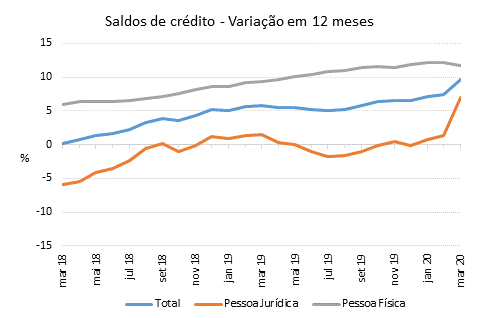
2. Operações de crédito do Sistema Financeiro Nacional (SFN)
O saldo das operações de crédito do SFN totalizou R$3,6 trilhões em março, crescendo 2,9% no mês, com expansões de 6,4% na carteira de pessoas jurídicas (saldo de R$1,5 trilhão) e de 0,3% na de pessoas físicas (R$2,1 trilhões). Como consequência, o crescimento em doze meses da carteira total acelerou de 7,4%, em fevereiro, para 9,6%, em março. O saldo com pessoas jurídicas acelerou de 1,4% para 6,9%, enquanto o de pessoas físicas passou de 12,1% para 11,7%, sempre considerando os mesmos períodos de comparação.
O crédito livre para pessoas jurídicas alcançou R$979 bilhões, representando crescimento de 9,9% no mês e de 21,7% em doze meses. Em março, ocorreu expansão tanto nas modalidades com influência sazonal (desconto de duplicatas e recebíveis, antecipação de faturas de cartão) quanto nas relacionadas a fluxo de caixa (capital de giro), e nas de comércio exterior (adiantamentos sobre contratos de câmbio, financiamentos a exportações). Adicionalmente, cresceram os saldos influenciados pela variação cambial (notadamente repasses externos). O crédito livre a pessoas físicas somou R$1,1 trilhão, com estabilidade no mês (+0,1%) e expansão de 15,7% em doze meses, com destaque para as modalidades crédito pessoal consignado e composição de dívidas.
No crédito direcionado, as operações com pessoas físicas atingiram R$919 bilhões, variações de 0,6% no mês e de 7,2% em doze meses, com aumentos nas carteiras de rural e imobiliário. O saldo das operações com pessoas jurídicas cresceu 0,8% no mês e manteve contração na comparação interanual, -11,9%, situando-se em R$557 bilhões em março.
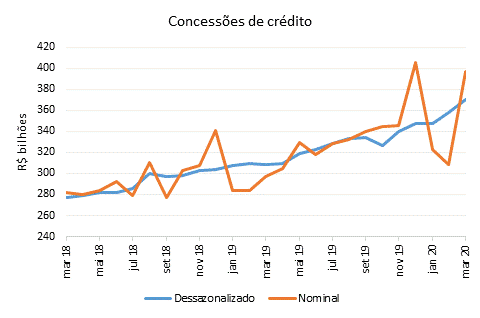
As concessões totais de crédito somaram R$397 bilhões em março. Na série ajustada sazonalmente, houve aumento de 3,5%, com crescimento de 28,2% em pessoas jurídicas e declínio de 11,4% em pessoas físicas. No acumulado do ano, comparado com o mesmo período do ano anterior, as concessões totais cresceram 18,8%, compostas por expansões de 27,6% no crédito às empresas e de 11,4% com famílias.
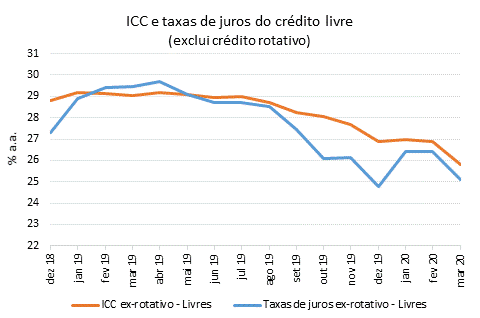
O Indicador de Custo do Crédito (ICC), que mede o custo médio de todo o crédito do SFN, situou-se em 20,1% a.a., reduções de 0,2 p.p. mês e de 0,8 p.p. na comparação interanual. No crédito livre não rotativo, o ICC registrou reduções mais expressivas: -1,1 p.p. e -3,2 p.p., nos mesmos períodos, alcançando 25,8%. O spread geral do ICC situou-se em 14,4 p.p., permanecendo estável no mês (-0,1 p.p.) e aumentando 0,2 p.p. em doze meses.
A taxa média de juros das operações contratadas em março alcançou 22,7% a.a., com quedas de 0,4 p.p. no mês e de 2,3 p.p. em doze meses. O spread geral das taxas de juros das concessões situou-se em 18 p.p., com declínios de 0,6 p.p. e 0,8 p.p., nos mesmos períodos.
No crédito livre, a taxa média de juros das concessões atingiu 33,2% a.a., reduzindo-se 0,9 p.p. no mês e 5,1 p.p. na comparação interanual. No crédito às famílias, taxa média de 46,1% a.a., houve queda de 0,6 p.p. em março (crédito pessoal não consignado: -11,9 p.p.; consignado INSS: -0,8 p.p.; cheque especial: -0,6 p.p.). No crédito livre às empresas, a taxa média de juros diminuiu 0,4 p.p. em março, para 16,6% a.a., com redução distribuída por diversas modalidades. Excluindo-se as operações rotativas, a taxa média de juros do crédito livre situou-se em 25,1%, registrando declínios de 1,3 p.p. no mês e de 4,4 p.p. na comparação interanual.
3. Agregados monetários
A base monetária atingiu R$307,6 bilhões em março, crescimento de 1,4% no mês e de 7,3% em doze meses. No mês, as reservas bancárias aumentaram 9,5% e o papel-moeda emitido permaneceu estável (+0,1%). Entre os fluxos mensais dos fatores condicionantes da base monetária, apresentaram impactos expansionistas os depósitos de instituições financeiras, R$108,9 bilhões (notadamente, liberações dos saldos de recolhimentos compulsórios a prazo, R$108,1 bilhões), as operações com derivativos, R$31,3 bilhões, e as operações do Tesouro Nacional, R$12 bilhões. Em sentido contracionista, as operações com títulos públicos federais, R$52,9 bilhões (resultado de resgates líquidos de R$124,9 bilhões no mercado primário e de vendas líquidas de R$177,8 bilhões no mercado secundário), e as operações do setor externo, R$91 bilhões, decorrente das operações com reservas internacionais.
Os meios de pagamento restritos (M1) alcançaram R$420,6 bilhões, crescimento de 4,5% no mês, com expansões de 7,3% nos depósitos à vista e de 1,9% no papel-moeda em poder do público. Considerando-se dados dessazonalizados, o M1 avançou 3,7% no mês.
O M2 cresceu 4,7% no mês, totalizando R$3,2 trilhões, refletindo, além do crescimento no saldo do M1, o aumento de 6,1% nos saldos dos títulos emitidos por instituições financeiras (depósitos a prazo: +11% mês). Em março, foram registradas captações líquidas de R$140,0 bilhões nos depósitos a prazo e de R$12,1 bilhões nos depósitos de poupança. O M3 avançou 1,0% no mês, atingindo R$6,9 trilhões, acompanhando o crescimento dos agregados M1 e M2, embora tenha ocorrido retração de 2,8% no saldo de seu principal componente, as quotas de fundos do mercado monetário, que totalizaram R$3,5 trilhões. O M4 aumentou 0,7% no mês e 7,1% nos últimos 12 meses, situando-se em R$7,3 trilhões.
4. Concessões ajustadas sazonalmente
Devido à suspensão da entrevista coletiva para a divulgação das estatísticas de agregados monetários e de crédito, as variações no mês e no trimestre das concessões de crédito dessazonalizadas passam a ser informadas no texto da Nota para a Imprensa.

DOCUMENTO: https://www.bcb.gov.br/content/estatisticas/docs_estatisticasmonetariascredito/Nota%20para%20a%20imprensa%20-%20Estat%C3%ADsticas%20Monet%C3%A1rias%20e%20de%20Cr%C3%A9dito.pdf
CONTAS PÚBLICAS
MEconomia. STN. 28/04/2020. TESOURO NACIONAL. Dívida Pública Federal cai 1,55% em março e estoque fica em R$ 4,214 trilhões. Emissões foram de R$ 21,58 bilhões, com resgates de R$ 143,58 bilhões no mês
O Tesouro Nacional apresentou, nesta terça-feira (28/4), o Resultado Mensal da Dívida Pública referente ao mês de março. No mês passado, as emissões da Dívida Pública Federal (DPF) corresponderam a R$ 21,58 bilhões, enquanto os resgates alcançaram R$ 143,58 bilhões, resultando em resgate líquido de R$ 121,99 bilhões. Desse total, R$ 121,88 bilhões são referentes ao resgate líquido da Dívida Pública Mobiliária Federal interna (DPMFi), e R$ 108 milhões, ao resgate líquido da Dívida Pública Federal externa (DPFe).
A emissão de R$ 21,583 bilhões ocorrida em março representa o menor valor desde maio de 2010. “No período de volatilidade, as condições do mercado se deterioraram, havendo redução de liquidez e perda de referência de preços, tanto que o Tesouro realizou leilões extraordinários de compra e venda”, explicou o coordenador-geral de Operações da Dívida Pública, Luis Felipe Vital. “Durante as atuações, não foram realizados leilões tradicionais, o que justifica o menor volume de emissão”.
Estoque
O estoque da Dívida Pública Federal (DPF) caiu R$ 66,2 bilhões, retração de 1,55% em termos nominais em relação a fevereiro, encerrando o período em R$ 4,21 trilhões.
A DPMFi teve seu estoque reduzido em 2,28%, passando de R$ 4,099 trilhões em fevereiro para R$ 4,006 trilhões em março. Isso ocorreu devido ao resgate líquido de R$ 121,88 bilhões, neutralizado, em parte, pela apropriação positiva de juros, no valor de R$ 28,43 bilhões.
Já o estoque da DPFe teve elevação de 15,03% sobre fevereiro, encerrando março em R$ 208,29 bilhões (US$ 40,07 bilhões). Foram R$ 188,92 bilhões (US$ 36,34 bilhões) referentes à dívida mobiliária e R$ 19,37 bilhões (US$ 3,73 bilhões) relativos à dívida contratual.
Custo médio
O custo médio acumulado nos últimos doze meses da DPF aumentou de 9,12% ao ano, em fevereiro, para 9,53% ao ano, em março. O custo médio acumulado em doze meses da DPMFi diminuiu, passando de 8,50% ao ano, em fevereiro, para 8,39% ao ano, em março.
O custo médio da dívida externa (DPFe) registrou um aumento no período, passando de 25,41% ao ano, em fevereiro, para 38,37% ao ano, em março. Isso principalmente, devido à apreciação do dólar em relação ao real de 15,56%, em março de 2020, contra uma apreciação de 4,23% ocorrida no mesmo período do ano anterior.
“A alta no custo médio do estoque da DPF se deve ao comportamento da DPFe, que é influenciado pelo câmbio. O custo médio do estoque da DPMFi e o das emissões continuaram em queda e foram, mais uma vez, os menores de suas séries históricas”, explicou Luis Felipe Vital.
Planejamento
Apesar do atual cenário adverso, gerado pelos impactos do novo coronavírus na economia, há tranquilidade para a administração da dívida, apontou a equipe técnica do governo, em entrevista coletiva virtual. “O planejamento da dívida já contempla os vencimentos previstos. Em períodos de maior volatilidade, o colchão da dívida permite que o Tesouro reduza o volume de emissões, evitando assim adicionar volatilidade e custos mais elevados. Quando os mercados se estabilizam, o Tesouro retoma sua estratégia de financiamento “, afirmou o coordenador-geral de Planejamento Estratégico da Dívida Pública do Tesouro Nacional, Luiz Fernando Alves.
“Não há nenhuma dificuldade para a rolagem da dívida. Sobre o colchão de liquidez, ele é suficiente para garantir, pelo menos, seis meses de vencimentos”, reforçou Vital.
“Não houve, por ora, reprogramação do uso de fontes da dívida para pagamentos de créditos e de outros gastos relacionados ao enfrentamento da crise. É natural que, em algum momento, fontes de emissão de dívida contribuam para arcar com esses gastos. Mas o planejamento de médio prazo permite que isso seja conduzido de maneira segura”, completou o subsecretário da Dívida Pública, José Franco.
Franco ressaltou que os números de março têm de ser vistos no contexto da economia global. “Os riscos trazidos pela pandemia atingiram não apenas o Brasil, como vários outros países emergentes. A situação que vimos em março foi de investidores buscando liquidez, com a venda de diversos ativos, em especial nos mercados emergentes. Note-se que a percepção de risco do Brasil em março foi comparável à dos outros países”, afirmou.
Detentores
O estoque de Fundos de Investimento (FI) apresentou redução, passando de R$ 1.104,34 bilhões, em fevereiro, para R$ 1.028,30 bilhões, em março. A participação relativa do grupo FI caiu para 25,67%.
O grupo Previdência, por sua vez, reduziu seu estoque em R$ 2,03 bilhões, atingindo R$ 1.007,48 bilhões no mês. Entretanto, a participação relativa do grupo Previdência subiu de 24,62% para 25,15%, resultado da queda mais acentuada dos estoques de fundos e não-residentes. O percentual de não residentes é o menor desde fevereiro de 2010, quando ficou em 9,81%.
As Instituições Financeiras aumentaram o estoque, passando de R$ 990,86 bilhões para R$ 1.035,55 bilhões no período. Os não-residentes apresentaram redução de R$ 54,59 bilhões no estoque, diminuindo a participação relativa do grupo de 10,93% para 9,82%. O grupo Governo apresentou participação relativa de 4,25% em março e o estoque das Seguradoras encerrou o mês em R$ 155,15 bilhões.
Um destaque: os Não-residentes possuem 90,99% de sua carteira em títulos prefixados, enquanto a carteira da Previdência é composta de 56,37% de títulos vinculados a índices de preços
Programa Tesouro Direto
O estoque do Tesouro Direto alcançou R$ 58,44 bilhões em março, uma redução de 0,61% em relação a fevereiro. As emissões atingiram R$ 3,01 bilhões no mês passado, enquanto os resgates corresponderam a R$ 3,79 bilhões, o que resultou em resgate líquido de R$ 780,90 milhões. O título mais demandado pelos investidores foi o Tesouro Selic, que respondeu por 47,18% do montante vendido.
No mês passado, 349.727novos participantes se cadastraram no Tesouro Direto. O total de investidores cadastrados chegou a 6.512.580, o que representa um incremento de 71,35% em relação ao mesmo mês do ano anterior.
MEconomia. STN. REUTERS. 28 DE ABRIL DE 2020. Gastos com coronavírus ainda não geraram reprogramação de uso de fontes da dívida, diz Tesouro
Por Marcela Ayres
BRASÍLIA (Reuters) - O governo não reprogramou, por ora, uso de fontes da dívida para pagamentos de créditos e de outros gastos relacionados ao enfrentamento da crise do coronavírus, afirmou o subsecretário da Dívida Pública, José Franco, nesta terça-feira.
Respondendo a questionamentos da imprensa por ocasião da divulgação do relatório da dívida pública de março, ele afirmou ser natural que, em algum momento, fontes de emissão de dívida contribuam para arcar com essas despesas.
“Mas o planejamento de médio prazo permite que isso seja conduzido de maneira segura”, afirmou ele, em resposta por escrito.
Segundo o coordenador geral de Operações da Dívida Pública, Luis Felipe Vital, a volatilidade dos mercados em abril diminuiu em relação a março, mas segue em patamares elevados. Nesse ambiente o Tesouro tem percebido os investidores com menor apetite ao risco e, por isso, tem privilegiado emissões de títulos prefixados mais curtos e os indexados à Selic.
Vital pontuou que o Tesouro não tem visto dificuldade de rolar “nenhum título”.
“Não há nenhuma dificuldade para a rolagem da dívida. Sobre o colchão de liquidez, ele é suficiente para garantir, pelo menos, seis meses de vencimentos”, disse.
Em mensagem divulgada à imprensa mais cedo, o Tesouro lembrou que realizou somente um leilão de títulos prefixados longos (NTN-F) em abril, com lotes pequenos e que foram integralmente vendidos.
O Tesouro destacou que, em períodos de volatilidade alta, as taxas de juros de prazos mais longos tendem a subir, razão pela qual opta por reduzir as ofertas e aguardar a estabilização do mercado, para evitar um aumento no custo de financiamento da dívida.
O Tesouro disse ainda que a percepção de risco de emergentes voltou a se deteriorar em abril, com o CDS Brasil de 5 anos subindo 35,7%, a 374 pontos, piora superior à observada para o México, Colômbia e Peru.
“Nos juros locais, a curva manteve o ganho de inclinação, com os vencimentos mais curtos bem ancorados pela política monetária e os mais longos reagindo à alta do dólar, assim como a incertezas nos mercados doméstico e internacional”, disse o Tesouro.
ECONOMIA
UBS. REUTERS. 28 DE ABRIL DE 2020. PIB do Brasil vai recuar 10,1% em 2020 em pior cenário, prevê UBS
SÃO PAULO (Reuters) - O UBS cortou para 5,5% a estimativa para a retração da economia brasileira em 2020, depois de no começo do mês prever queda de 2%, mas, a depender do cenário analisado, o tombo pode ser ainda maior, de 10,1%.
No cenário um, a economia cai 5,5%. No dois, 7,2%. E no três sofre o recuo de dois dígitos.
No cenário um, as restrições de distanciamento social existentes permanecem em vigor até meados de maio, com atividades voltando ao normal em grande parte até o final de junho.
No dois, as restrições só começam a ser retiradas até o final de junho, com normalização até o término de agosto.
Já no três, a pandemia de coronavírus não é efetivamente controlada até meados de 2021, e, com isso, as restrições são apenas parcialmente removidas.
Mas os economistas Tony Volpon e Fabio Ramos, que assinam o relatório desta terça-feira, ponderaram que mesmo fora do cenário três a economia pode sofrer uma queda mais forte que o previsto, afetada por questões políticas.
Os profissionais destacam o risco da pandemia levar a níveis elevados de incerteza política e de política, com impactos negativos sobre a confiança do investidor, o que poderia gerar um estado de prêmio de risco permanentemente mais alto nos preços dos ativos.
Nesse caso, “podemos ver o resultado parecido com o do cenário três mesmo que a pandemia esteja sob controle”, disseram Volpon e Ramos.
Em 2021, o UBS vê a economia em expansão de 6,5% (cenário um), 8,3% (cenário dois) e 5,4% (cenário três).
Por José de Castro
MOODY'S. REUTERS. 28 DE ABRIL DE 2020. Moody's piora projeção e passa a ver queda de 5,2% do PIB brasileiro em 2020
SÃO PAULO (Reuters) - A agência de classificação de risco Moody’s rebaixou a previsão para o desempenho da economia brasileira neste ano, passando a prever contração de 5,2%, enquanto cortou as projeções para todos os países do G20 conforme os custos da pandemia do coronavírus se acumulam “rapidamente”.
No começo do mês, a agência previa que o PIB brasileiro encolheria 1,6% em 2020. Para 2021, a Moody’s vê crescimento de 3,3%.
A agência —que atribui ao Brasil rating de crédito soberano de longo prazo em moeda estrangeira de “Ba2”, com perspectiva estável— calculou que as medidas de apoio do governo brasileiro contra os efeitos econômicos do coronavírus somam cerca de 6,5% do PIB, mas avaliou que deverão ser expandidas conforme a escala dos danos econõmicos se tornar mais clara e a pressão da opinião pública por mais ação crescer.
A Moody’s inclui o Brasil na lista de países cujos governos adotaram medidas menos rigorosas de combate à transmissão da pandemia, junto com México, Turquia, Indonésia, Arábia Saudita e Rússia.
A agência estima que a economia do G20 cairá 5,8% em 2020.
Por José de Castro
INFLAÇÃO
IBGE. 28/04/2020. IPCA-15 fica em -0,01% em abril
O Índice Nacional de Preços ao Consumidor Amplo 15 (IPCA-15) teve variação de -0,01% em abril. Foi o menor resultado para um mês de abril desde o início do Plano Real e ficou 0,03 ponto percentual (p.p.) abaixo da taxa de março (0,02%). Em abril de 2019, a taxa fora de 0,72%. Em 2020, o IPCA-15 acumula alta de 0,94% e, em 12 meses, a variação acumulada foi de 2,92%, abaixo dos 3,67% registrados nos 12 meses imediatamente anteriores. Seis dos nove grupos pesquisados tiveram deflação em abril.
| Período | TAXA | |||
|---|---|---|---|---|
| Abril de 2020 | -0,01% | |||
| Março de 2020 | 0,02% | |||
| Abril de 2019 | 0,72% | |||
| Acumulado no ano | 0,94% | |||
| Acumulado nos últimos 12 meses | 2,92% | |||
Transportes (-1,47%) foi o grupo com a contribuição negativa mais intensa (-0,30 p.p.) para o índice de abril, assim como aconteceu em março, quando esse grupo já havia apresentado queda (-0,80%). Outros cinco grupos também tiveram deflação em abril, com destaque para os Artigos de residência (-3,19%), que contribuíram com -0,12 p.p no índice do mês.
No lado das altas, o grupo Alimentação e bebidas (2,46%) acelerou em relação a março (0,35%) e teve o maior impacto (0,48 p.p.) sobre o IPCA-15 de abril. Os demais grupos ficaram entre a queda de 0,32% em Saúde e cuidados pessoais e a alta de 0,12% em Habitação.
| Grupo | Variação (%) | Impacto (p.p.) | ||
|---|---|---|---|---|
| Março | Abril | Março | Abril | |
| Índice Geral | 0,02 | -0,01 | 0,02 | -0,01 |
| Alimentação e bebidas | 0,35 | 2,46 | 0,07 | 0,48 |
| Habitação | -0,28 | 0,12 | -0,04 | 0,02 |
| Artigos de residência | -0,05 | -3,19 | 0,00 | -0,12 |
| Vestuário | -0,22 | 0,01 | -0,01 | 0,00 |
| Transportes | -0,80 | -1,47 | -0,17 | -0,30 |
| Saúde e cuidados pessoais | 0,84 | -0,32 | 0,11 | -0,04 |
| Despesas pessoais | 0,03 | -0,28 | 0,00 | -0,03 |
| Educação | 0,61 | -0,01 | 0,04 | 0,00 |
| Comunicação | 0,33 | -0,30 | 0,02 | -0,02 |
| Fonte: IBGE, Diretoria de Pesquisas, Coordenação de Índices de Preços, Sistema Nacional de Índices de Preços ao Consumidor. | ||||
A queda em Transportes (-1,47%) deve-se principalmente ao recuo nos preços dos combustíveis (-5,76%). A gasolina (-5,41%), o etanol (-9,08%) e o óleo diesel (-4,65%) tiveram quedas mais intensas que as do mês anterior e contribuíram, juntos, com -0,35 p.p. de impacto no IPCA-15 de abril. A gasolina, em particular, exerceu o mais intenso impacto negativo (-0,27 p.p.) no índice do mês, com quedas de preço em todas as áreas pesquisadas. Ao longo de março, a Petrobras anunciou várias reduções no preço desse combustível, sendo a última (dentro do período de referência do índice) de 5,00%, em 28 de março.
Ainda em Transportes, outros itens também recuaram em abril, como o seguro voluntário de veículo (-2,74%), o transporte por aplicativo (-3,11%) e o aluguel de veículo (-7,68%). Por outro lado, as passagens aéreas subiram 14,83%, após três meses consecutivos de quedas. Além disso, o item ônibus urbano (0,36%) teve variação positiva, decorrente do reajuste de 5,00% no preço das passagens em Salvador (4,28%), vigente desde 12 de março.
Também o grupo Artigos de residência (-3,19%) contribuiu com queda de -0,12 p.p sobre o índice do mês. Os eletrodomésticos e equipamentos e os artigos de tv, som e informática, cujos preços haviam subido em fevereiro e março, registraram quedas de 7,15% e 1,95%, respectivamente. Os itens de mobiliário (-4,00%) também caíram, contribuindo com -0,04 p.p. no índice do mês. No lado das altas, ressaltam-se as variações positivas nos itens roupa de cama (0,69%), roupa de banho (0,82%), artigos de iluminação (1,15%) e utensílios de vidro e louça (1,23%).
Entre os grupos em alta, Alimentação e bebidas (2,46%) acelerou em relação ao mês anterior (0,35%) e apresentou o maior impacto do IPCA-15 de abril, com 0,48 p.p. Destaque para a alimentação no domicílio, que subiu 3,14%. A cebola (35,79%) e o tomate (17,01%) aceleraram na relação a março, quando haviam subido 7,92% e 4,93%, respectivamente.
Já a batata-inglesa passou de uma queda de 1,02% em março para alta de 21,24% em abril. A cenoura (31,67%), por sua vez, registrou variação positiva pelo quarto mês consecutivo e acumula, em 2020, alta de 102,71%.
Merecem destaque, ainda, as frutas, cujos preços subiram 8,84% em abril, contribuindo com 0,07 p.p. no IPCA-15 do mês. Já os preços das carnes (-0,27%) recuaram pelo terceiro mês consecutivo, embora menos intensamente do que fevereiro (-5,04%) e março (-1,81%).
A alimentação fora do domicílio também acelerou de março (0,03%) para abril (0,94%), influenciada pela alta do lanche (3,23%). O item refeição (0,05%) ficou próximo da estabilidade.
Em Habitação (0,12%), destacam-se, em particular, as altas do gás de botijão (0,82%) e da taxa de água e esgoto (0,28%), esta última decorrente do reajuste médio de 6,23% em uma das concessionárias de Porto Alegre (2,65%), vigente desde 21 de março. No item energia elétrica (-0,10%), a maior variação foi observada no Rio de Janeiro (5,21%), por conta dos reajustes aplicados nas tarifas residenciais de duas concessionárias, ambos válidos a partir de 15 de março. Vale lembrar que, em abril, permanece em vigor a bandeira tarifária verde, em que não há cobrança adicional na conta de luz. Por fim, destaca-se que o resultado do item gás encanado (-0,27%) é consequência da redução média de 0,85% nas tarifas em São Paulo (-0,45%), aplicada a partir de 2 de março.
Seis das onze regiões pesquisadas tiveram deflação em abril. O maior índice foi na região metropolitana do Rio de Janeiro (0,61%), influenciado pela alta da energia elétrica. Já o menor resultado foi no município de Goiânia (-0,52%), por conta das quedas nos preços dos combustíveis (-8,13%), especialmente gasolina (-6,93%) e etanol (-14,38%).
| Região | Peso Regional (%) | Variação Mensal (%) | Variação Acumulada (%) | ||
|---|---|---|---|---|---|
| Março | Abril | Ano | 12 meses | ||
| Rio de Janeiro | 9,77 | -0,03 | 0,61 | 1,03 | 2,27 |
| Recife | 4,71 | 0,32 | 0,17 | 1,42 | 2,59 |
| Salvador | 7,19 | 0,10 | 0,09 | 1,16 | 2,64 |
| Fortaleza | 3,88 | 0,44 | 0,02 | 1,81 | 3,76 |
| Belo Horizonte | 10,04 | 0,23 | 0,00 | 1,17 | 3,26 |
| Porto Alegre | 8,61 | -0,20 | -0,04 | 0,74 | 2,40 |
| São Paulo | 33,45 | -0,03 | -0,05 | 1,11 | 3,33 |
| Belém | 4,46 | 0,05 | -0,16 | 1,04 | 3,89 |
| Curitiba | 8,09 | 0,13 | -0,21 | 0,42 | 2,72 |
| Brasília | 4,84 | -0,02 | -0,40 | 0,06 | 1,99 |
| Goiânia | 4,96 | -0,50 | -0,52 | -0,22 | 2,87 |
| Brasil | 100,00 | 0,02 | -0,01 | 0,94 | 2,92 |
| Fonte: IBGE, Diretoria de Pesquisas, Coordenação de Índices de Preços, SistemaNacional de Índices de Preços ao Consumidor. | |||||
Para o cálculo do IPCA-15, os preços foram coletados no período de 17 de março a 14 de abril de 2020 (referência) e comparados com aqueles vigentes de 12 de fevereiro a 16 de março de 2020 (base). Em virtude da pandemia de Covid-19, o IBGE suspendeu, no dia 18 de março, a coleta presencial de preços. A partir dessa data, os preços passaram a ser coletados por outros meios, como pesquisas em sites de internet, por telefone ou e-mail. O indicador refere-se às famílias com rendimento de 1 a 40 salários mínimos e abrange as regiões metropolitanas do Rio de Janeiro, Porto Alegre, Belo Horizonte, Recife, São Paulo, Belém, Fortaleza, Salvador e Curitiba, além de Brasília e Goiânia. A metodologia utilizada é a mesma do IPCA, a diferença está no período de coleta e na abrangência geográfica.
Prévia da inflação. IPCA-15 tem deflação de 0,01%, menor taxa para abril desde início do Plano Real. Queda nos preços da gasolina exerceu o maior impacto individual negativo na prévia da inflação de abril
A redução nos preços dos combustíveis marcou a prévia da inflação de abril, que registrou -0,01%, o menor resultado para o mês desde o início do Plano Real, em julho de 1994. O recuo nos preços da gasolina (-5,41%), que teve o maior impacto individual negativo no índice, do etanol (-9,08%) e do óleo diesel (-4,65%) levaram a uma queda de 5,76% dos combustíveis, que pressionaram o Índice Nacional de Preços ao Consumidor Amplo 15 (IPCA-15), divulgado hoje (28) pelo IBGE.
A taxa é 0,03 ponto percentual (p.p.) abaixo da registrada em março, de 0,02%. No ano, o IPCA-15 acumula alta de 0,94% e, em 12 meses, a variação acumulada foi de 2,92%, abaixo dos 3,67% registrados nos 12 meses imediatamente anteriores. Em abril de 2019, a taxa foi de 0,72%.
IPCA-15 - Variação mensal (%)
Clique e arraste para zoom
Fonte: IBGE - Índice Nacional de Preços ao Consumidor Amplo 15
O grupo Transportes (que abrange o preço dos combustíveis e tem o maior peso no consumo das famílias) teve a maior influência no resultado, com queda de 1,47%. Nesse grupo, além dos combustíveis, também recuaram o seguro voluntário de veículo (-2,74%), o transporte por aplicativo (-3,11%) e o aluguel de veículo (-7,68%). Por outro lado, as passagens aéreas apresentaram alta de 14,83%, após três meses consecutivos de quedas. Além disso, o item ônibus urbano (0,36%) também registrou variação positiva, por conta do reajuste de 5% no preço das passagens em Salvador, vigente desde 12 de março.
Outro grupo a apresentar queda mais intensa em abril foi Artigos de residência (-3,19%). Destaque para os eletrodomésticos e equipamentos e artigos de TV, som e informática, cujos preços haviam subido em fevereiro e março e registraram quedas de -7,15% e -1,95%, respectivamente.
Preços dos alimentos sobem 2,46% em abril
No lado das altas, destaque para Alimentação e bebidas, com variação de 2,46% e impacto de 0,48 p.p no IPCA-15. No grupo, o item alimentação no domicílio foi destaque, com aumento de 3,14%.
A cebola (35,79%) e o tomate (17,01%) aceleraram na comparação com o mês anterior, enquanto a batata-inglesa passou de uma queda de 1,02% em março para alta de 21,24% em abril. A cenoura (31,67%) registrou variação positiva pelo quarto mês consecutivo, acumulando no ano alta de 102,71%. Os preços das carnes (-0,27%) recuaram pelo terceiro mês consecutivo, embora a queda sido menos intensa que as registradas em fevereiro (-5,04%) e março (-1,81%).
Em Habitação (0,12%), o destaque foi para as altas do gás de botijão (0,82%) e da taxa de água e esgoto (0,28%), esta última decorrente do reajuste médio de 6,23% em uma das concessionárias de Porto Alegre, vigente desde 21 de março.
Já no item energia elétrica (-0,10%), a maior variação foi observada no Rio de Janeiro (5,21%), por conta dos reajustes aplicados nas tarifas residenciais de duas concessionárias, ambos válidos a partir de 15 de março. Em abril, permanece em vigor a bandeira tarifária verde, em que não há cobrança adicional na conta de luz. Por fim, o resultado do item gás encanado (-0,27%) é consequência da redução média de 0,85% nas tarifas em São Paulo (-0,45%), aplicada a partir de 2 de março.
Seis das 11 regiões pesquisadas tiveram deflação em abril. O maior índice foi na região metropolitana do Rio de Janeiro (0,61%), influenciado pela alta da energia elétrica. Já o menor resultado foi no município de Goiânia (-0,52%), por conta das quedas nos preços dos combustíveis (-8,13%), especialmente gasolina (-6,93%) e etanol (-14,38%).
Os preços foram coletados no período de 17 de março a 14 de abril de 2020 (referência) e comparados com aqueles vigentes de 12 de fevereiro a 16 de março de 2020 (base). Em virtude da pandemia de Covid-19, o IBGE suspendeu, no dia 18 de março, a coleta presencial de preços. A partir dessa data, os preços passaram a ser coletados por outros meios, como pesquisas em sites de internet, por telefone ou e-mail.
DOCUMENTO: https://agenciadenoticias.ibge.gov.br/agencia-sala-de-imprensa/2013-agencia-de-noticias/releases/27504-ipca-15-fica-em-0-01-em-abril
SERVIÇOS
FGV. IBRE. 28/04/20. Sondagens e Índices de Confiança. Sondagem de Serviços. Confiança de Serviços recua em abril e atinge menor nível desde o inicio da Série Histórica
O Índice de Confiança de Serviços (ICS), da Fundação Getulio Vargas, recuou 31,7 pontos em abril, para 51,1 pontos, atingindo o menor nível da série histórica iniciada em junho de 2008. O resultado contribui com uma perda acumulada de 45,1 pontos no ano.
“Os efeitos da pandemia se tornam cada vez mais claros no setor de serviços. Depois de registrar os primeiros sinais em março, a queda da confiança foi aprofundada em abril. A percepção dos empresários sobre a situação atual, que ainda apresentava suspiros em março, também despencou, juntando-se ao ritmo de piora das expectativas. O cenário para o curto prazo é de elevada incerteza e ainda sem perspectivas de recuperação, dado a fraca demanda e a provável deterioração do mercado de trabalho”, avaliou Rodolpho Tobler, economista da FGV IBRE.
A variação negativa do ICS impactou todos os 13 segmentos da pesquisa e foi determinada pela deterioração tanto das avaliações sobre o momento atual quanto das expectativas em relação aos próximos meses. O Índice de Situação Atual (ISA-S) caiu pelo quarto mês consecutivo. A baixa de 29,7 pontos levou o indicador a 55,5 pontos, o menor nível histórico. Anteriormente, o mínimo histórico havia ocorrido em outubro de 2015 (66,2 pontos). O Índice de Expectativas (IE-S) despencou 33,5 pontos, para 47,3 pontos, atingindo também o menor nível histórico. A última vez que o índice atingiu um mínimo histórico foi em setembro de 2015 (63,8 pontos).
O Nível de Utilização da Capacidade Instalada (NUCI) do setor de serviços caiu 2,5 pontos percentuais para 79,5%, acumulando 3,4 pontos percentuais de queda em dois meses.
O Coronavírus como principal impeditivo do setor de serviços em 2020
Desde julho de 2017, os principais fatores considerados limitativos para a melhora dos negócios das empresas do setor de serviços, quesito “Fatores Limitativos” da pesquisa, eram a competição e a insuficiência de demanda. Em março, 40,5% das empresas apontaram a competição era um fator limitativo enquanto 33,2% consideraram a demanda insuficiente. No entanto, em abril a opção de fator limitativo mais indicada pelos empresários foram “Outros fatores” com 60,8% das citações, a maior proporção da série histórica. Desses, cerca de 80,4% especificaram o “Coronavírus” ou os efeitos dele como principal limitação. Em seguida, as maiores parcelas são da demanda insuficiente, que aumentou para 34,3%, e competição, que decresceu de 40,5% para 20,9% no período.
DOCUMENTO: https://portalibre.fgv.br/navegacao-superior/noticias/confianca-de-servicos-recua-em-abril-e-atinge-menor-nivel-desde-o-inicio-da-serie-historica.htm
CONSTRUÇÃO CIVIL
FGV. IBRE. 28/04/20. Índices Gerais de Preços. INCC-M. INCC-M varia 0,18% em abril
O Índice Nacional de Custo da Construção – M (INCC-M)1 variou 0,18% em abril, percentual inferior ao apurado no mês anterior, quando o índice registrou alta de 0,38%. A taxa do índice relativo a Materiais, Equipamentos e Serviços subiu 0,38% em abril, após variar de 0,35% em março. O índice referente à Mão de Obra não variou em abril. No mês anterior a taxa foi de 0,40%.
Materiais, Equipamentos e Serviços
No grupo Materiais, Equipamentos e Serviços, a variação correspondente a Materiais e Equipamentos foi de 0,44%, contra 0,42% no mês anterior. Três dos quatro subgrupos componentes apresentaram acréscimo em suas taxas de variação, destacando-se materiais para acabamento, cuja taxa passou de 0,38% para 0,73%.
A variação relativa a Serviços passou de 0,11% em março para 0,13% em abril. Neste grupo, vale destacar o avanço da taxa do item refeição pronta no local de trabalho, que passou de 0,15% para 0,35%.
Mão de obra
O índice referente à Mão de Obra não variou em abril. No mês anterior, este grupo apresentou alta de 0,40%.
Capitais
Quatro capitais apresentaram desaceleração em suas taxas de variação: Salvador, Belo Horizonte, Recife e Porto Alegre. Em contrapartida, Rio de Janeiro e São Paulo apresentaram acréscimos em suas taxas de variação e Brasília repetiu a taxa do mês anterior.
DOCUMENTO: https://portalibre.fgv.br/navegacao-superior/noticias/incc-m-varia-0-18-em-abril.htm
FGV. IBRE. 28/04/20. Sondagens e Índices de Confiança. Sondagem da Construção. Confiança da Construção recua e registra o menor valor desde o inicio da série histórica
O Índice de Confiança da Construção (ICST), da Fundação Getulio Vargas, recuou 25,8 pontos em abril, atingindo 65,0 pontos. Essa é a maior queda mensal e o menor valor do índice desde o início da série histórica.
“Em abril, houve uma piora abrupta e sem precedentes no ambiente de negócios da construção: os empresários apontaram redução em suas carteiras de contrato, mais dificuldade no acesso ao crédito e queda da atividade. As perspectivas de queda na demanda nos próximos meses derrubaram o otimismo empresarial dos primeiros meses do ano. Vale notar que nem no pior momento da crise de 2014-2018 que reduziu em 30% o PIB setorial, os empresários se mostraram tão pessimistas. Essa percepção negativa dos empresários não poupou nenhum segmento da construção”, observou Ana Maria Castelo, Coordenadora de Projetos da Construção da FGV IBRE.
A forte queda do ICST em abril é reflexo da piora da percepção dos empresários principalmente em relação às expectativas para os próximos três e seis meses. O Índice de Expectativas (IE-CST) apresentou retração de 35,6 pontos, para 59,9 pontos, o menor valor da série histórica. O indicador de demanda prevista apresentou queda de 37,6 pontos, para 58,5 pontos, enquanto o indicador de tendência dos negócios para os próximos seis meses caiu 33,2 pontos, para 61,6 pontos. Ambos os indicadores atingiram o seu mínimo histórico.
Em relação ao momento presente, o Índice de Situação Atual (ISA-CST) cedeu 15,4 pontos, alcançando 70,9 pontos, o menor valor desde junho de 2018 (70,8 pontos). O indicador de situação atual dos negócios, que mais contribuiu para o resultado do índice, apresentou queda de 21,5 pontos, para 66,2 pontos, o menor valor desde junho de 2017 (65,8 pontos). Já o indicador de carteira de contratos recuou 9,3 pontos, para 75,8 pontos, o menor valor desde setembro de 2019 (75,1 pontos)
O Nível de Utilização da Capacidade (NUCI) do setor apresentou recuo de 12,0 pontos percentuais (p.p.), para 57,6%, menor valor da série histórica. Neste mês, tanto o NUCI de Mão de Obra quanto de Máquinas e Equipamentos contribuíram para o resultado, já que ambos cederam 12,1 p.p. e 10,8 p.p. respectivamente.
Emprego
Com o aumento do pessimismo relativo à demanda futura, a intenção de contratar dos empresários da construção também foi bastante afetada. O Indicador de Emprego Previsto (EP) caiu 33 pontos na comparação com março com ajuste sazonal. “Em grande parte dos estados, a construção foi considerada atividade essencial e por isso não sofreu paralização, assim a forte queda do Indicador de EP parece mais relacionada ao adiamento de projetos”, avaliou Ana Castelo.
DOCUMENTO: https://portalibre.fgv.br/navegacao-superior/noticias/confianca-da-construcao-recua-e-registra-o-menor-valor-desde-o-inicio-da-serie-historica.htm
INDÚSTRIA
CNI. 28/04/2020. Coronavírus causa queda sem precedentes na atividade industrial. Queda na demanda leva à redução na produção, no uso da capacidade instalada e no emprego, em março. Empresários também relatam piora na situação financeira e menor intenção de realizar investimentos. Índice de evolução da produção industrial ficou em 33,3 pontos em março – 14,2 pontos abaixo do apurado em fevereiro
Pesquisa da Confederação Nacional da Indústria (CNI) divulgada nesta terça-feira (28) mostra que a crise desencadeada pela pandemia da covid-19 causou impactos intensos na indústria. Dados da Sondagem Industrial, referente ao mês de março, mostram que a queda da demanda forçou uma redução sem precedentes da atividade industrial, que levou a utilização da capacidade instalada ao menor nível já registrado na série mensal, iniciada em 2010.
O índice de evolução da produção industrial ficou em 33,3 pontos em março – 14,2 pontos abaixo do apurado em fevereiro e bem abaixo da linha de 50 pontos que separa queda e crescimento da produção. O indicador reflete uma queda em uma intensidade e disseminação nunca registrada na série mensal.
O índice de Utilização da Capacidade Industrial (UCI) efetiva em relação ao usual recuou de 44,6 pontos em fevereiro para 31,1 em março – o menor valor da série histórica mensal iniciada em janeiro de 2010. Esse indicador procura medir o quão a atividade industrial está aquecida. Valores abaixo de 50 pontos indicam atividade desaquecida.

O percentual de Utilização da Capacidade Instalada (UCI), por sua vez, recuou 10 pontos percentuais entre fevereiro e março, para 58%. O percentual também é o menor da série.
“Os impactos da crise causada pela pandemia da covid-19 são intensos e disseminados pela indústria. A queda da demanda forçou uma redução sem precedentes da atividade industrial, que levou a utilização da capacidade instalada ao menor nível já registrado na série mensal”, afirma a pesquisa da CNI.
Os setores de Móveis, Produtos têxteis, Vestuário e acessórios, Calçados e suas partes e Impressão e reprodução estão entre os mais afetados. Perfumaria, sabões, detergentes, produtos de limpeza e de higiene pessoal foi o único a não registrar, de um modo geral, queda em sua produção, em março. Farmoquímicos e farmacêuticos, Químicos e Alimentos registraram impactos negativos, mas menos intenso que dos demais setores de atividade.
Emprego também cai, mas com intensidade menor
O número de empregados também caiu em março. O índice de evolução do número de empregados também ficou abaixo da linha divisória de 50 pontos, em 44,6 pontos. A pesquisa ressalta que, apesar da forte queda na produção, a intensidade da redução no emprego foi inferior à apurada nos meses de março de 2015 e 2016.
“O motivo se deve, provavelmente à rapidez e surpresa da queda na produção e uma reação das empresas por meio de ajustes temporários como férias coletivas, banco de horas, redução de jornada de trabalho e/ou suspensão do contrato de trabalho”, afirma o documento.
Mesmo com a queda na produção, os estoques na indústria mantiveram-se inalterados em março. O índice de evolução dos estoques ficou em 50 pontos, ou seja, mostra estabilidade. Esse cenário é explicado pela paralisação nas vendas ao consumidor, o que resultou numa resposta imediata tanto na produção quanto nos estoques.
“Não foi uma produção que diminuiu o ritmo em razão do acúmulo de estoques, mas uma resposta quase que instantânea à interrupção de quase todos os negócios na economia brasileira”, diz a pesquisa.
Empresas industriais relatam piora significativa das condições financeiras
A situação financeira das empresas industriais piorou como consequência da forte queda do faturamento e da produção em decorrência dos efeitos da pandemia. Com isso, os empresários passaram a mostrar profunda insatisfação com a situação financeira e a margem de lucro operacional de seus negócios no primeiro trimestre de 2020.
O Índice de Satisfação com a Situação Financeira recuou 8,6 pontos, para 41,4 pontos no primeiro trimestre de 2020. O índice havia alcançado 50 pontos no último trimestre de 2019, o que não acontecia desde o quarto trimestre de 2012. A queda é a maior registrada entre dois trimestres consecutivos e levou o índice para o menor valor desde o segundo trimestre de 2016, no auge da crise econômica anterior.
O lucro das empresas também foi afetado negativamente nos três primeiros meses deste ano. O Índice de Satisfação com o Lucro Operacional recuou 8,6 pontos, de 45,8 pontos para 37,2 pontos. O índice também estava em patamar relativamente elevado no quarto trimestre de 2019: embora abaixo dos 50 pontos, o índice era o maior desde o primeiro trimestre de 2011 e acumulava alta de 5,7 pontos nos dois últimos trimestres.
Com a queda, o índice passou a registrar a maior insatisfação com as margens de lucro desde o terceiro trimestre de 2016. O acesso ao crédito, que vinha melhorando, se tornou muito mais difícil no primeiro trimestre de 2020. O índice de facilidade de acesso ao crédito recuou 9,4 pontos, de 43,2 pontos para 33,8 pontos. O índice vinha de seis altas trimestrais consecutivas, período no qual cresceu 6,3 pontos.
Carga tributária deixa de ser principal problema da indústria
A falta de demanda, consequência das restrições ao comércio e do isolamento dos consumidores, assumiu a primeira posição no ranking de principais problemas no primeiro trimestre de 2020, tomando o posto da elevada carga tributária. A assinalação subiu 6,2 pontos percentuais, passando de 29,6% para 35,8%.
A elevada carga tributária foi assinalada por 34% das empresas, o que representa uma queda de 9,6 pontos percentuais. O último trimestre – e único até então, na nova série – em que a elevada carga tributária não havia liderado o ranking de principais problemas foi no primeiro trimestre de 2015.
Em terceiro lugar no ranking está a taxa de câmbio, com 28,9% de assinalações. Trata-se de uma alta de 12,2 pontos percentuais na comparação com o último trimestre de 2019. A elevada instabilidade da taxa de câmbio e desvalorização da moeda brasileira explicam tal crescimento.

A falta ou alto custo das matérias-primas ficaram na quarta posição, com 20,2% de assinalações. Esse percentual é explicado pela interrupção do fornecimento de certas matérias-primas, sobretudo oriundas da China, por conta da quarentena imposta naquele país no início do trimestre, assim como dificuldades logísticas e de produção devido às medidas de isolamento social adotadas no Brasil, ao fim do trimestre.
Também como resultado da crise, verifica-se um crescimento nas assinalações em inadimplência dos clientes e falta de capital de giro, na quinta e sexta posições do ranking.
O forte impacto do novo coronavírus na indústria brasileira também é ilustrado na opção outros, onde os respondentes apontam, de forma espontânea, problemas não pré-identificados. Entre os empresários participantes desta edição da Sondagem Industrial, 14,3% citaram a crise da covid-19 e as repercussões (coronavírus, epidemia, quarentena e paralisação de atividades, entre outros) como um dos três principais problemas do trimestre.
Empresários relatam pessimismo e menor intenção de investir Os índices de expectativas caíram fortemente no mês de abril e passaram a mostrar significativo pessimismo do empresário. Todos os índices apresentaram um recuo superior a 17 pontos na comparação com março, sendo que o índice de expectativa de demanda sofreu o maior abalo, registrando uma queda de 26,9 pontos. Essas quedas, assim como sua expressiva magnitude, eram esperadas devido à grande contração da atividade produtiva, em razão da pandemia do novo coronavírus.
O índice de intenção de investimento, por sua vez, caiu de 58,3 pontos em março para 36,7 pontos em abril. O recuo reflete a piora da situação financeira, além da elevada incerteza e queda na confiança dos empresários.
Indicadores Industriais. Faturamento segue acima do registrado em 2019
O faturamento real da indústria mantém trajetória de crescimento dos últimos meses, embora o ritmo de crescimento tenha se reduzido em relação a janeiro. Junto com a Utilização da Capacidade Instalada (UCI) esses são os únicos Indicadores Industriais que mostram tendência de crescimento e registram resultados positivos em fevereiro.

DOCUMENTO: https://bucket-gw-cni-static-cms-si.s3.amazonaws.com/media/filer_public/36/ff/36ff611e-9701-4e87-bd53-d226e5926495/indicadoresindustriais_fevereiro2020.pdf
COMÉRCIO EXTERIOR BRASILEIRO
MEconomia. 27/04/2020. COMÉRCIO EXTERIOR. Ministério da Economia abre consulta pública sobre novas propostas de Portarias de Defesa Comercial. Interessados terão 60 dias para encaminhar contribuições em relação a temas como pré-pleito, preço provável e períodos de investigações antidumping
A Secretaria de Comércio Exterior do Ministério da Economia (Secex/ME) abriu consulta pública para obter contribuições da sociedade civil a respeito de quatro propostas de portarias relacionadas à defesa comercial. As portarias disciplinam práticas já adotadas pela Secex como autoridade investigadora, determinando critérios objetivos e transparentes para a utilização de disposições previstas de forma não detalhada no Decreto nº 8.058, de 2013.
De acordo com a Circular nº 29/2020, publicada nesta segunda-feira (27/4) no Diário Oficial da União, a consulta envolve propostas sobre Fase Facultativa de Pré-pleito; Parâmetros para Análise de Preço Provável; Critérios para Utilização do Artigo 109 do Decreto nº 8.058/2013; e Prorrogação de Direito Antidumping em Montante Inferior. O objetivo da Secex com a atualização legislativa é promover objetividade, transparência e segurança jurídica às partes interessadas dos processos de defesa comercial.
Os textos das propostas de portaria e as orientações sobre o envio de sugestões estão disponíveis no site do Ministério da Economia .
Informações sobre as propostas de portaria submetidas à consulta pública:
Pré-pleitos
A primeira proposta de portaria dispõe sobre a fase facultativa de pré-pleito no âmbito de investigações originais, revisões e demais procedimentos de defesa comercial previstos nos Decretos nº 8.058/2013, nº 1.751/1995, e nº 1.488/1995; na Portaria Secex nº 41/2018 e nos acordos comerciais em vigor no Brasil.
Essa proposta estabelece que o pré-pleito consiste em procedimento facultativo, anterior à submissão de petições de início e estabelece as regras para sua apresentação. Também prevê que a análise dos pré-pleitos está sujeita à disponibilidade da Subsecretaria de Defesa Comercial e Interesse Público (SDCOM), com prioridade aos submetidos por indústrias fragmentadas.
Por fim, a proposta define que eventuais impressões e dúvidas preliminares proferidas pela SDCOM não vincularão a Subsecretaria durante as fases posteriores de eventual processo administrativo de defesa comercial.
Preço provável
A segunda proposta, sobre revisões de final de período de investigações antidumping, dispõe sobre os parâmetros para a análise sobre preço provável das importações objeto de dumping e o seu provável efeito sobre os preços do produto similar no mercado interno brasileiro, prevista no Decreto nº 8.058.
Esse normativo se aplica às hipóteses em que não houver exportações do país ao qual se aplica a medida antidumping, ou em que houver apenas exportações em quantidades não representativas durante o período de revisão, ou seja, casos de “retomada de dumping”. Nesse contexto, a proposta de portaria estabelece as alternativas possíveis para apuração do “preço provável”, com base nas informações submetidas pelas partes interessadas e disponíveis para a SDCOM em cada revisão de final de período.
A proposta também apresenta os fatores que guiarão a análise a ser realizada pela SDCOM quanto à adequação e aplicabilidade das alternativas de preço provável apresentadas, prevendo a possibilidade de adoção de metodologias de ajuste desse preço.
Por fim, a proposta estabelece as linhas gerais para tomada de decisão final da SDCOM acerca do preço provável a ser adotado no âmbito do caso concreto.
Art. 109 do Decreto nº 8.058, de 2013
A terceira proposta de portaria, também referente a revisões de final de período de investigações antidumping, estabelece os critérios para a suspensão de direitos antidumping com base no art. 109 do Decreto nº 8.058, de 2013. Nesse sentido, a proposta estabelece os fatores que poderão motivar a recomendação da SDCOM de prorrogação de direito antidumping com sua imediata suspensão com base no art. 109 do decreto, explicando a análise a ser realizada em relação a cada fator.
Essa proposta também dispõe sobre a análise a ser realizada pela SDCOM para a retomada da cobrança de eventual direito antidumping suspenso com base no art. 109 do Decreto nº 8.058/2013, apresentando os critérios a serem considerados no âmbito dessa avaliação.
Prorrogação de direito antidumping em montante inferior em casos de retomada de dumping
A quarta proposta de portaria, também referente a revisões de final de período de investigações antidumping, estabelece os critérios para a prorrogação de direito antidumping em montante inferior ao do direito em vigor em situações específicas, nas quais não tenha havido exportações do país ao qual se aplica a medida antidumping ou de ter havido apenas exportações em quantidades não representativas durante o período de revisão.
O normativo estabelece os fatores a serem considerados pela SDCOM quando da recomendação de prorrogação de direito antidumping em montante inferior ao do direito em vigor, as metodologias para cálculo do direito antidumping reduzido e as hipóteses nas quais não será recomendada a prorrogação do direito antidumping em montante inferior ao do direito em vigor.
AGRICULTURA
Frente Parlamentar da Agricopecuária (FPA). PORTAL G1. 28/04/2020. Estudo. Agronegócio brasileiro abre mercado para 48 produtos em 21 países desde 2019, diz levantamento. Estudo, que foi baseado em missões oficiais do governo, destaca setor de carnes e mostra avanço na Ásia.
Desde janeiro de 2019 até março de 2020, o agronegócio brasileiro conseguiu abrir mercado para 48 produtos do setor em 21 países diferentes, de acordo com um levantamento divulgado nesta terça-feira (28) pela Frente Parlamentar da Agropecuária (FPA), com dados do Ministério da Agricultura.
O estudo da bancada ruralista no Congresso levou em conta as informações das missões oficiais realizadas pelo governo federal no período e mostrou novos mercados para os seguintes produtos:
- Arábia Saudita: castanhas do Brasil
- Argentina: bile aviária, carne suína curada, peixes vivos, embriões bovinos, sêmen suíno, carne de rã, lácteos para alimentação animal, termoprocessados de aves, aparas de pele de bovinos para gelatina e lanolina;
- Cazaquistão: bovinos vivos;
- China: lácteos, miúdos de origem suína, carne bovina termoprocessada, farelo de algodão, melão e pescados;
- Colômbia: plântulas de teca e milho pipoca;
- Coreia do Sul: pescados;
- Egito: caprinos e ovinos vivos, lácteos, carne de frango, carne bovina e miúdos bovinos;
- Emirados Árabes Unidos: ovos férteis e pintos de um dia;
- Equador: bovinos vivos;
- Estados Unidos: reabertura de mercado para carne bovina in natura;
- Guiana: mudas de coco;
- Índia: carne de frango e gergelim;
- Indonésia: frigoríficos de carne bovina;
- Japão: lácteos para alimentação animal;
- Kuwait: carne bovina;
- Malásia: bovinos vivos;
- Marrocos: pescados, pintos de um dia e ovos férteis;
- México: arroz beneficiado;
- Peru: farinha de subprodutos de aves;
- Singapura: carne de aves e miúdos de carne suína;
- Zâmbia: bovinos vivos, sêmen bovino e embrião bovino.
/i.s3.glbimg.com/v1/AUTH_59edd422c0c84a879bd37670ae4f538a/internal_photos/bs/2020/i/8/CzZ4EFTAuTLHl1ObgR9A/info-mapa-dos-mercados.jpeg)
Um dos exemplos do estudo é para a carne de frango, que o setor estima crescimento de até 8% nas exportações de totais nos próximos anos com a abertura de mercado da Índia.
“Produtos como carne, soja, leite, milho, algodão, pescados, laranja e muitos outros têm ocupado espaço significativo no agronegócio mundial. O país tem fortalecido vínculos já existentes e rompido barreiras para abertura de novos mercados”, disse a FPA em nota.
A carne bovina brasileira também vive bom momento, com previsão de exportações anuais de, ao menos, 25 mil toneladas com a abertura de mercado com a Indonésia, além de novas parcerias com o Kuwait e a reabertura para a venda do produto in natura para os Estados Unidos.
Já para o pescado nacional se espera um incremento de 18% nas exportações para o Marrocos e a Coreia do Sul.
Os países da África também são vistos como um grandes parceiros comerciais.
“Ao olharmos para o continente africano, é possível notar a abertura de um potencial de negócio da ordem de US$ 8 bilhões, com a abertura do mercado lácteo com o Egito, assim como os Emirados Árabes Unidos, que também têm fortalecido o comércio agropecuário com o Brasil”, afirmou a FPA.
Fator China
Principal parceira do agronegócio brasileiro, a China abriu mercado para alguns produtos e também ampliou mercados para alimentos que já tinham acesso ao país.
Um produto novo no país são os melões brasileiros, a primeira fruta do Brasil vendida para os chineses. Também houve a autorização para a venda de produtos lácteos, que tem potencial milionário de negócios.
A abertura de mercado com os chineses incluiu também exportações de farelo de algodão, miúdos suínos e carne bovina termoprocessada.
Além disso, houve a habilitação de 38 plantas frigoríficas, sendo 22 de carne bovina, 6de suínos, 9 de aves e 1 de asinino (asno) e a redução de 30% para 15% de uma importante tarifa para o suco de laranja brasileiro naquele país.
INDÍGENAS E QUILOMBOLAS
IBGE. 28/04/2020. Novo coronavírus. Contra Covid-19, IBGE antecipa dados sobre indígenas e quilombolas
O IBGE estima que no Brasil existiam 7.103 localidades indígenas e 5.972 localidades quilombolas em 2019, de acordo com a Base de Informações Geográficas e Estatísticas sobre os Indígenas e Quilombolas, feita a partir da base territorial do próximo Censo, adiado para 2021, e do Censo 2010. Na próxima semana, as informações estarão disponíveis também em mapas e planilhas interativas no hotsite covid19.ibge.gov.br, que reúne dados para combater a pandemia causada pelo novo coronavírus.
A divulgação foi antecipada para subsidiar o desenvolvimento de políticas, planos e logísticas para enfrentar a Covid-19 junto aos povos tradicionais. Os dados atualizados sobre os contingentes dessas populações serão conhecidos após o Censo 2021.
O estudo mostra que as localidades indígenas estão distribuídas em 827 municípios brasileiros. Do total de localidades, 632 são terras indígenas oficialmente delimitadas. O restante constitui 5.494 agrupamentos indígenas, sendo 4.648 dentro de terras indígenas e 846 fora desses territórios. As demais 977 são denominadas outras localidades indígenas, aquelas onde há presença desses povos, mas a uma distância mínima de 50 metros entre os domicílios.
O IBGE considera localidade todo lugar do território nacional onde exista um aglomerado permanente de habitantes. Já os agrupamentos são o conjunto de 15 ou mais indivíduos em uma ou mais moradias contíguas (até 50 metros de distância) e que estabelecem vínculos familiares ou comunitários.
A base mostra também que do Censo 2010 até as estimativas de 2019, o número de localidades indígenas deu um salto de 1.856 para 7.103. De acordo com o gerente de Territórios Tradicionais e Áreas Protegidas do IBGE, Fernando Damasco, isso decorre do aperfeiçoamento da capacidade técnica do Instituto na identificação dessas comunidades tradicionais nos últimos anos.
“Esse mapeamento dá um panorama detalhado da presença indígena nos municípios brasileiros. Ele poderá ser usado por órgãos públicos e organizações da sociedade civil nas diversas ações de enfrentamento à pandemia, já que associa dados do cadastro de localidades indígenas com informações geoespaciais e populacionais geradas a partir do Censo 2010, fornecendo informações das novas dinâmicas dessa população no território”, disse ele. De acordo com o Censo daquele ano, havia 896.917 indígenas no Brasil, sendo que 517.383 viviam em terras indígenas.
Damasco ressalta que o mapeamento divulgado hoje tem como foco as localidades. “É importante destacar que uma mesma comunidade pode ser constituída de várias localidades, conforme as características territoriais locais. O levantamento completo das comunidades indígenas e quilombolas será realizado por quesitos específicos no Censo 2021”.
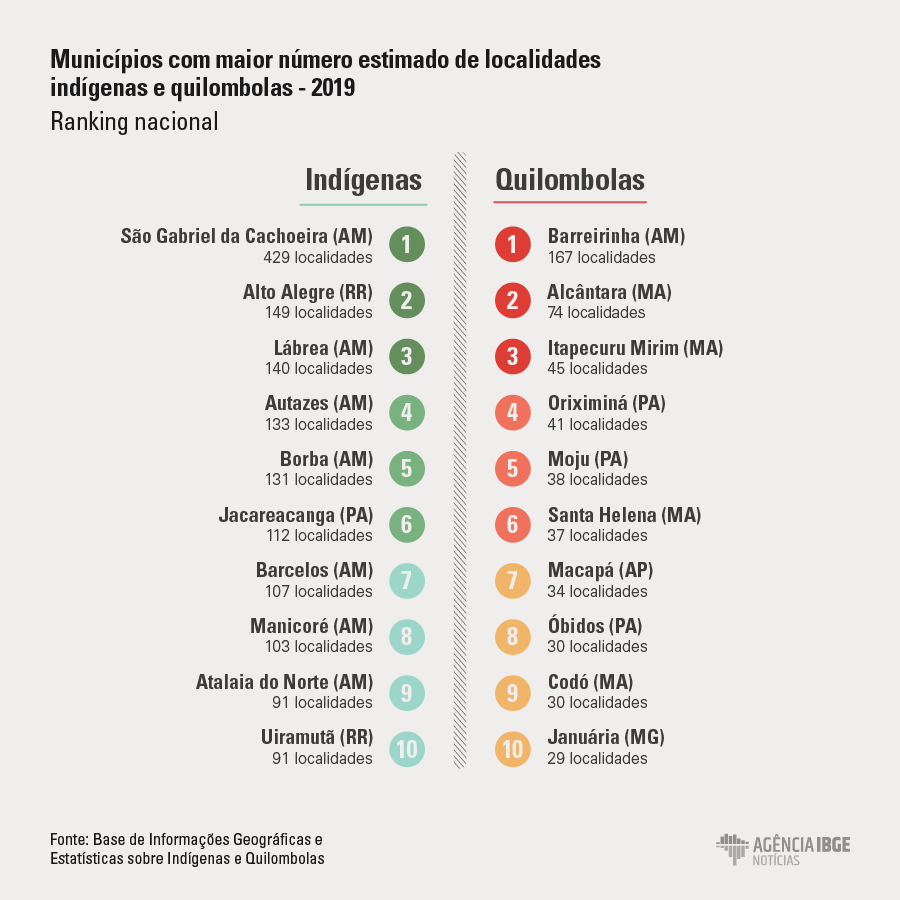
Região Norte reúne quase dois terços das localidades indígenas
O Norte é a região com o maior número de localidades indígenas, 4.504, reunindo 63,4% do total. Em seguida vem o Nordeste com 1.211, o Centro-Oeste com 713, o Sudeste com 374, e o Sul, com 301 localidades indígenas.
Entre os estados, o Amazonas reúne 2.602 localidades indígenas do país. Roraima vem logo em seguida com 587 registros. O Pará soma 546 e é o terceiro estado com mais localidades indígenas. Já Sergipe é o estado com menor número de ocorrências, quatro ao todo.
Dos dez municípios com mais localidades indígenas, sete estão no Amazonas. São Gabriel da Cachoeira (AM) é a cidade com mais localidades indígenas, com 429 no total. Em segundo lugar está Alto Alegre, em Roraima, com 149. O Pará também tem uma cidade na lista: Jacareacanga, com 112 localidades.
A região Norte também reúne o maior número de terras indígenas oficialmente delimitadas. São 305 no total, sendo que o Amazonas detém quase a metade, 148. O segundo estado com terras reconhecidas é o Mato Grosso (73), seguido do Pará (54). Há terras indígenas delimitadas em todas as demais regiões do Brasil: Centro-Oeste (126), Nordeste (79), Sul (77) e Sudeste (45).
Quilombolas vivem em mais municípios que indígenas
Os indígenas começaram a ser contabilizados nas estatísticas oficiais do país em 1872, antes mesmo da criação do IBGE. Já a população que se considera quilombola será identificada pela primeira vez no próximo Censo, adiado para 2021. Embora não tenha estimativa dessa população, o IBGE calcula que o país possua 5.972 localidades quilombolas, que estão divididas em 1.672 municípios brasileiros, mais que o dobro com localidades indígenas (827).
Do total de localidades, 404 são territórios oficialmente reconhecidos, 2.308 são denominados agrupamentos quilombolas e o restante, 3.260, identificados como outras localidades quilombolas. Entre os agrupamentos, 709 estão localizados dentro dos territórios quilombolas oficialmente delimitados e 1.599 fora dessas terras.
O Nordeste possui 3.171 localidades quilombolas, pouco mais da metade do total. Em seguida vem o Sudeste com 1.359 quilombos. O restante está dividido nas regiões Norte (873), Sul (319) e Centro-Oeste (250).
A Bahia tem o maior número de localidades quilombolas entre todos os estados do país. São 1.046 no total. Em segundo lugar está Minas Gerais com 1.021 comunidades do tipo. Outros destaques são o Maranhão com 866 e o Pará, que soma 516. Acre e Roraima não possuem localidades quilombolas.
No Nordeste também está localizado o maior número de territórios quilombolas oficialmente reconhecidos, somando 176 ocorrências. Mas é no estado do Pará, no Norte, que está a maioria das localidades com delimitação oficial (75). O Maranhão vem em seguida com 60 e a Bahia, com 40 quilombos. Entre as grandes regiões, depois do Nordeste, está o Norte (94), Sudeste (76), Sul (36) e Centro-Oeste (22) também com territórios reconhecidos oficialmente.
Barreirinha, no Amazonas, é a cidade com mais localidades quilombolas do país (167), seguida de Alcântara (74) e Itapecuru Mirim (45), ambas no Maranhão, e Oriximiná (41) e Moju (38), no Pará.
“Essa é a primeira estimativa de dados quilombolas produzida pelo IBGE. Como o Instituto nunca divulgou informações sobre essa população, os dados apresentados estão em fase de consolidação e, portanto, sujeitos a revisões até o próximo Censo, em 2021, quando poderão ser confirmados”, destacou Damasco.
IBGE contra a Covid-19
Além dessas informações sobre indígenas e quilombolas, o IBGE já disponibilizou diversos resultados de pesquisas, que podem ser cruzados e contribuir com o combate à pandemia causada pelo novo coronavírus. O hotsite, lançado na última semana, reúne os dados, além de informações sobre parcerias com outros órgãos públicos, como a Fundação Oswaldo Cruz (Fiocruz), e as mudanças nas rotinas e projetos do Instituto durante o período de distanciamento social.
DOCUMENTO: https://agenciadenoticias.ibge.gov.br/agencia-noticias/2012-agencia-de-noticias/noticias/27487-contra-covid-19-ibge-antecipa-dados-sobre-indigenas-e-quilombolas
AVIAÇÃO
BOEING. REUTERS. 28 DE ABRIL DE 2020. Boeing 737 MAX deve continuar sem voar pelo menos até agosto, dizem fontes
Por David Shepardson
WASHINGTON (Reuters) - O Boeing 737 MAX deve continuar em terra até pelo menos agosto, uma vez que a fabricante norte-americana segue tendo dificuldades com o software da aeronave, afirmaram fontes informadas sobre o assunto à Reuters.
A Boeing sinalizou que agora espera obter aprovação de autoridades de aviação para o retorno do avião ao serviço em agosto. Isso pode ser adiado até o outono do Hemisfério Norte (entre final de setembro e dezembro), disseram as fontes.
O avião mais vendido da Boeing não pode voar desde março de 2019 depois de duas quedas em um intervalo de cinco meses que mataram 346 pessoas. A Boeing suspendeu a produção do modelo em janeiro e tem 400 unidades do MAX em estoque.
A Southwest Airlines, maior operadora do 737 MAX no mundo, afirmou nesta terça-feira a retirada do MAX de seus planos de frotas até 30 de outubro, citando “recente comunicação da Boeing sobre a data de retorno ao serviço” do avião.
A agência de aviação dos Estados Unidos (FAA) repetidamente tem informado que não tem cronograma para a aprovação do retorno dos voos do avião.
A Boeing não comentou o assunto, citando período de silêncio antes da divulgação dos resultados trimestrais, na quarta-feira.
Em 7 de abril, a Boeing citou que precisava fazer duas novas atualizações no computador de controle de voo do 737 MAX. Um dos problemas envolve falhas hipotéticas no microprocessador de controle de voo, que podem levar a uma perda de um controle conhecido como “runaway stabilizer”. O outro problema pode levar a uma desconexão do recurso de piloto automático durante a aproximação final.
A Boeing disse também em 7 de abril que estava trabalhando com a Collins Aerospace Systems, Raytheon Technologies, nas atualizações dos softwares, mas ainda não tinha certeza quando a Collins completaria o trabalho e quanto tempo as autoridades de aviação levariam para avaliar os reparos.
Airbus. Boeing. REUTERS. 28 DE ABRIL DE 2020. Fabricantes de aviões desaceleram planos de novos jatos e focam em sobrevivência
Por Tim Hepher
PARIS (Reuters) - Fabricantes de aviões estão reduzindo drasticamente o trabalho em novos projetos para economizar recursos, adotando estratégia de sobrevivência a uma crise que deve ter repercussões ao longo desta década, afirmaram fontes na indústria.
As gigantes do setor Airbus e Boeing devem enfatizar prioridades imediatas sobre planos de longo prazo quando divulgarem seus resultados financeiros na quarta-feira, no momento em que as viagens de avião foram drasticamente reduzidas por causa das medidas de confinamento contra o coronavírus.
A tendência foi ressaltada pela decisão da Boeing de desistir no final de semana de seguir com o processo de compra da divisão de aviação comercial da Embraer, um negócio de 4,2 bilhões de dólares que virou alvo de uma ação de arbitragem aberta pela companhia brasileira.
A Boeing já tinha congelado em janeiro planos de desenvolver um par de jatos para substituir os modelos 757 e 767, conhecidos como Programa Novo Avião de Médio Porte (NMA, na sigla em inglês), enquanto se concentra em tentar fazer o 737 MAX voltar ao serviço.
Desde então, a Boeing tem procurado separar o programa das duas aeronaves NMA em um avião no estilo do 757, enquanto estuda uma atualização mais modesta do 767, afirmam fontes.
O programa abriria caminho para um sucessor do MAX em um projeto embrionário conhecido como Futuro Avião Pequeno (FSA).
“Tudo do NMA, FSA e por aí vai foi congelado por enquanto”, disse uma fonte com conhecimento do assunto.
Outros projetos que também devem ser deixados em segundo plano incluem um plano de dar ao jato 767 novas asas e motores, prolongando a vida do modelo.
A Flightglobal publicou em outubro que a Boeing estava negociando com a General Electric sobre um “767-X” com novos motores. Mas fontes próximas do assunto disseram que a Boeing estava estudando um plano maior de dar ao modelo novas asas também.
A Boeing não comentou sobre projetos individuais, mas negou qualquer interrupção de planos.
“Continuamos a olhar para as futuras necessidades do mercado e a investir em pesquisa e desenvolvimento”, disse um porta-voz da companhia norte-americana.
O analista Scott Hamilton, da Leeham News, afirmou em relatório que a crise do coronavírus vai “inverter completamente” as estratégias de produtos.
Desde que a Boeing entregou o último 767 de passageiros em 2014, o modelo ganhou foi relegado a tarefas de transporte de carga e precisaria ser modificado para cumprir restrições de emissões de poluentes previstas para 2028.
757-PLUS
Um substituto para o 757 enfrentaria fortes vendas do Airbus A321 e permitiria à Boeing ser pioneira em futuros sistemas necessários para jatos pequenos e médios, especialmente cockpits.
A Boeing parou de fabricar o 757, com cerca de 240 lugares, em 2004. Qualquer substituto do avião teria alcance ligeiramente maior e mais assentos, algo que uma fonte chamou de “757-Plus”.
Na Airbus, o trabalho continua no A321XLR, um modelo de longo alcance da família de aeronaves de menor porte mais vendida da companhia europeia.
A companhia desistiu de trabalhar em um protótipo híbrido-elétrico que estava desenvolvendo com a Rolls-Royce para atender uma futura demanda por aviões sem emissões de carbono, chamado de E-Fan-X. E o presidente-executivo da companhia, Guillaume Faury, está cortando uma série de outros projetos herdados de seu predecessor, afirmam fontes.
Faury tem dito que a Airbus continua comprometida em trabalhar em aeronaves “verdes”, mas em um ritmo mais lento por causa da crise do coronavírus.
Também na geladeira ficaram planos confidenciais para versões cargueiras do A330neo ou do A350, disseram fontes.
Um porta-voz do grupo europeu afirmou que a Airbus está sempre buscando novos conceitos baseados em plataformas existentes, mas que ainda é prematuro especular sobre as oportunidades futuras para cargueiros da Airbus.
Analistas afirmam que a atualização 777X do mini-jumbo da Boeing 777, que teve um primeiro voo em janeiro, também pode sofrer adiamentos por causa da queda na demanda por aeronaves de dois corredores gerada pela pandemia.
________________
LGCJ.:

