US ECONOMICS
ARGENTINA
U.S. Department of State. JULY 9, 2019. Argentina’s Independence Day. STATEMENT. MICHAEL R. POMPEO, SECRETARY OF STATE
On behalf of the Government of the United States, I extend my best wishes to the people of Argentina on the 203rd anniversary of your independence.
The United States and Argentina enjoy a deep partnership, founded upon shared commitments to democracy and human rights, strong economic ties, and science and technology cooperation. I applaud Argentina for its leadership in promoting democracy, transparency, good governance, and security in the region and around the world, as evidenced by its hosting of the successful G20 Leaders’ Summit in 2018 and its unwavering support for the restoration of democracy in Venezuela through the Lima Group.
Happy Independence Day, Argentina! ¡Al gran pueblo Argentino, salud! Your friends in the United States wish you peace and prosperity in the year ahead.
INTERNATIONAL TRADE
DoC. USITC. July 8, 2019. U.S. Department of Commerce Issues Preliminary Determinations in the Countervailing Duty Investigations of Imports of Fabricated Structural Steel from China, Canada, and Mexico
WASHINGTON – Today, the U.S. Department of Commerce announced its preliminary determinations in the countervailing duty (CVD) investigations of imports of fabricated structural steel from Canada, China, and Mexico. In the China and Mexico investigations, Commerce made affirmative determinations, finding that exporters received countervailable subsidies at rates ranging from 30.30 to 177.43 percent, and 0.01 (de minimis) to 74.01 percent, respectively. In the Canada investigation, Commerce made a negative determination, finding that exporters received countervailable subsidies at de minimis levels ranging from 0.12 to 0.45 percent.
Based on these preliminary determinations, the Department of Commerce will instruct U.S. Customs and Border Protection to collect cash deposits from importers of fabricated structural steel from China and Mexico.
In 2018, imports of fabricated structural steel from Canada, China, and Mexico were valued at an estimated $722.5 million, $897.5 million, and $622.4 million, respectively.
The petitioner for these investigations is the American Institute of Steel Construction Full Member Subgroup (Chicago, IL).
The strict enforcement of U.S. trade law is a primary focus of the Trump Administration. Since the beginning of the current Administration, Commerce has initiated 172 new antidumping and countervailing duty investigations – this is a 219 percent increase from the comparable period in the previous administration.
Antidumping and countervailing duty laws provide American businesses and workers with an internationally accepted mechanism to seek relief from the harmful effects of the unfair pricing of imports into the United States. Commerce currently maintains 488 antidumping and countervailing duty orders which provide relief to American companies and industries impacted by unfair trade.
Commerce is currently scheduled to announce its final CVD determinations on or about November 19, 2019.
If Commerce makes affirmative final determinations, the U.S. International Trade Commission (ITC) will be scheduled to make its final injury determinations on or about January 2, 2020. If Commerce makes affirmative final determinations in these investigations, and the ITC makes affirmative final injury determinations, Commerce will issue CVD orders. If Commerce makes negative final determinations, or the ITC makes negative final determinations of injury, the investigations will be terminated and no orders will be issued.
The U.S. Department of Commerce’s Enforcement and Compliance unit within the International Trade Administration is responsible for vigorously enforcing U.S. trade law and does so through an impartial, transparent process that abides by international law and is based on factual evidence provided on the record.
Foreign companies that price their products in the U.S. market below the cost of production or below prices in their home markets are subject to antidumping duties. Companies that receive unfair subsidies from their governments, such as grants, loans, equity infusions, tax breaks, or production inputs, are subject to countervailing duties aimed at directly countering those subsidies.
Fact sheet: https://enforcement.trade.gov/download/factsheets/factsheet-multiple-fabricated-structural-steel-cvd-prelim-070819.pdf
MONETARY POLICY
FED. July 09, 2019. Speech. Welcoming Remarks (via prerecorded video). Chair Jerome H. Powell. At "Stress Testing: A Discussion and Review," a research conference at the Federal Reserve Bank of Boston, Boston, Massachusetts
VÍDEO: https://www.federalreserve.gov/newsevents/speech/powell20190709a.htm
Good morning everyone and thank you to President Rosengren and the Boston Fed for hosting this conference.
The Federal Reserve is strongly committed to stress testing as a cornerstone of our bank supervisory and financial stability missions. Stress testing is perhaps the most successful supervisory innovation of the post-crisis era. But if stress tests are to continue to serve their critical function, they will need to evolve in the years ahead to keep pace with the ever-changing financial system, as they have since the first round of tests in 2009.
Before looking to the future, let me recall a bit of history. A little more than 10 years ago, the United States and the world teetered on the brink of economic catastrophe. What was urgently needed was a way to restore confidence in the financial system—a daunting challenge. Neither the banks, nor the regulators, nor the public had a reliable sense of the strength and resilience of our major banks. The announcement of forward-looking stress-testing results in May 2009 helped restore confidence and stabilize banks by providing a credible and independent picture of their finances.1 These original stress tests evolved into the Comprehensive Capital Analysis and Review, or CCAR, program, which has served to institutionalize capital planning by firms, and supervision by the Fed, as a forward-looking endeavor.
Since 2009, large banks have added more than $800 billion in common equity capital, giving them a much thicker cushion to deal with losses. Banks have gotten much better at assessing and managing their risks, effectively tracking commitments across their organizations, anticipating capital needs, and planning for different scenarios.
The stress tests of the future—5 and 10 years from now—will need to continue to ensure that banks remain able, even in a severe downturn, to provide the credit that households and businesses depend on. As financial institutions and the financial system evolve, stress testing will need to keep up. When the next episode of financial instability presents itself, it may do so in a messy and unexpected way. Banks will need to be ready not just for expected risks, but for unexpected ones. Thus, the tests will need to vary from year to year, and to explore even quite unlikely scenarios.
If the stress tests do not evolve, they risk becoming a compliance exercise, breeding complacency from both supervisors and banks. We might also, inadvertently, encourage the development of a banking system where, over time, all banks would look much alike rather than the banking system we want and need, one with diverse institutions with different business models. We simply can't let these things happen.
The purpose of today's gathering is to help us think about how to ensure the tests continue to foster a dynamic banking system, financial stability, and a healthy and growing economy. We have invited a wide range participants—fellow regulators, bankers, analysts, academics, and community groups—with diverse perspectives. Because we do not claim a monopoly on knowledge or wisdom, we have invited many who have disagreed with us in the past. I strongly believe that diverse perspectives and healthy debate will sharpen our thinking and lead us to better answers.
I'm sorry I'm not able to be with you today. And I want to particularly thank all of the speakers, discussants, and other participants for helping us grapple with the challenges of ensuring that tomorrow's stress tests remain as effective and vigorous as they are today. Thank you.
NOTE
- The stress tests were announced in February 2009, and the results were released in May 2009. See, respectively, Board of Governors of the Federal Reserve System, Federal Deposit Insurance Corporation, Office of the Comptroller of the Currency, and Office of Thrift Supervision (2009), "Agencies to Begin Forward-Looking Economic Assessments," joint press release, February 25; and Board of Governors (2009), "Federal Reserve, OCC, and FDIC Release Results of the Supervisory Capital Assessment Program," press release, May 7.
CONSUMER CREDIT
FED. July 8, 2019. Consumer Credit May 2019
In May, consumer credit increased at a seasonally adjusted annual rate of 5 percent. Revolving credit increased at an annual rate of 8-1/4 percent, while nonrevolving credit increased at an annual rate of 4 percent.
FULL DOCUMENT: https://www.federalreserve.gov/releases/g19/current/default.htm
AFRICA
U.S. Department of State. 07/08/2019. Fifty-Two TechGirls from the Middle East, North Africa, and Central Asia Arrive in the United States
Secondary school girls from the Middle East, North Africa, and Central Asia arrived in Washington D.C. this week to participate in the U.S. Department of State’s TechGirls exchange program. Launched in 2012, this four-week program aims to empower girls in the science, technology, engineering, and math (STEM) fields to pursue higher education and careers through hands-on skills development training with American technology leaders. Central Asia was added to the program for the first time this year, expanding on the program’s mission to provide more opportunities for girls to improve their STEM skills and positively impact their communities.
The TechGirls exchange strengthens American national and economic security by empowering girls with the technical skills and strategic relationships to lead in a global economy. The program’s centerpiece will be a 12-day Java coding camp with American peers at Virginia Tech’s interactive labs in Blacksburg, Virginia. The TechGirls participants will also visit the NASA Goddard Space Flight Center in Greenbelt, Maryland and experience life with an American family for a weekend in southern Virginia.
Public and private sector organizations will mentor the TechGirls, offering them insights into STEM careers. Legacy International, the Department of State’s implementing partner for this program, has teamed up with a number of partners, including AT&T, Echo & Co, the Federal Communications Commission (FCC), the Department of Small and Local Business Development (DSLBD), Flatiron School, Islamic Relief, NPR, Vox Media, 1901 Group, Nlock.one, Excella, Ozmo, Qualtrax Inc, and Joba Design.
TechGirls exchange alumnae, now totaling 186, have trained more than 3,500 peers in their home countries and have pursued studies at leading institutions around the world. This network of alumnae supports the U.S. commitment to empower women worldwide through STEM education.
FULL DOCUMENT: https://www.state.gov/fifty-two-techgirls-from-the-middle-east-north-africa-and-central-asia-arrive-in-the-united-states/
________________
ORGANISMS
AFRICA
IMF. JULY 9, 2019. FINANCE & DEVELOPMENT, JUNE 2019, VOL. 56, NO. 2 PDF VERSION. In the Trenches. Open for Business. Clare Akamanzi explains how Rwanda is encouraging private sector development
Dear Colleague,
As part of our "In The Trenches" series with policymakers, we recently interviewed Clare Akamanzi, CEO of the Rwanda Development Board (RDB), about transforming Rwanda into a dynamic global hub for business, investment, and innovation.
"About 25 years ago, we were 100 percent reliant on aid, but today we are 86 percent self-reliant, which means that we depend on aid for only about 14 percent of our budget," said Akamanzi, who previously served as head of strategy and policy for President Paul Kagame. "On average, the private sector now creates about 38,000 jobs per year, many of which are targeted toward our young people."
Today the World Bank’s Ease of Doing Business Report ranks Rwanda the 29th easiest place to do business in the world, and the second in Africa. A few years ago, Rwanda was ranked at 150. "This is the result of some concrete reforms put in place to simplify the processes for starting a business, registering property, filing taxes, and accessing tax-related information," explained Akamanzi. "Today, you can register a company in six hours. In some instances, digital solutions have played a key enabling role."
These reforms have borne fruit worth billions of dollars.
Said Akamanzi: "Last year, by the time we closed our investment books, we had registered $2 billion worth of investments. In 2010, it was about $318 million. For example, Volkswagen is assembling in Rwanda. We have a company from Latin America called Positivo that is assembling laptops. We have an American-Nigerian company, Andela, that is going to train about 700 local programmers. And we have a company that has begun refining our coltan."
...
Happy reading,
Rahim Kanani, Digital Editor, F&D Magazine, International Monetary Fund
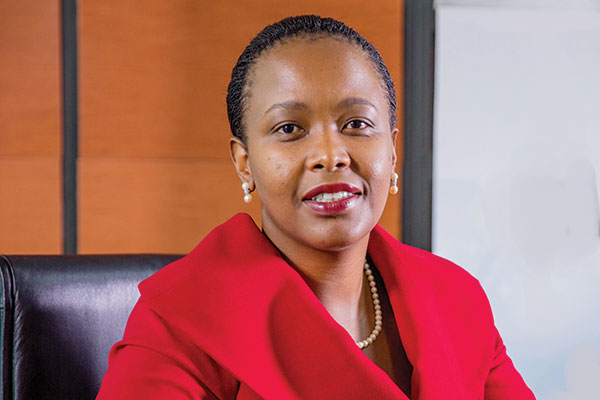
CLARE AKAMANZI spends her days working on innovative ways to bring more business to her country. As CEO of the Rwanda Development Board (RDB), a multiagency governmental department billed as a “one-stop shop” for investors, Akamanzi has seen the country earn accolades for its business-friendly environment, recently winning the #2 spot regionally in the World Bank’s ease of doing business rankings. Prior to her RDB role, Akamanzi served as head of strategy and policy for Paul Kagame, president of Rwanda. She was also Rwanda’s commercial diplomat in London and its trade negotiator at the World Trade Organization in Geneva. Akamanzi holds a law degree and a master’s degree in international trade and investment policy. She spoke with F&D’s Andrew Kanyegirire in early March.
F&D: What is the RDB’s role in getting the private sector to contribute to Rwanda’s development?
CA: Our vision is to transform Rwanda into a dynamic global hub for business, investment, and innovation. We are responsible for promoting investments and exports. We provide services covering a range of issues faced by the business community: negotiating contracts with the private sector, helping investors to secure concessions, and settling disagreements. We are also in charge of the privatization of government assets and tourism promotion, including the management of national parks.
Since the RDB’s establishment in 2009, doing business in Rwanda has gotten easier, and the private sector has contributed more toward Rwanda’s economic growth. About 25 years ago, we were 100 percent reliant on aid, but today we are 86 percent self-reliant, which means that we depend on aid for only about 14 percent of our budget. On average, the private sector now creates about 38,000 jobs per year, many of which are targeted toward our young people.
F&D: How have you improved the business environment?
CA: Along with the Ministry of Economic Planning, we have spent a lot of time thinking about those sectors that require private sector engagement, what the challenges are, and whether these sectors can indeed help to generate wealth and jobs for Rwandans. We took a very focused approach to this, and it is therefore not surprising that today the World Bank’s Ease of Doing Business Report ranks Rwanda the 29th easiest place to do business in the world and the second in Africa. A few years ago, we were ranked at 150. This is the result of some concrete reforms put in place to simplify the processes for starting a business, registering property, filing taxes, and accessing tax-related information. Today, you can register a company in six hours. In some instances, digital solutions have played a key enabling role.
We have also focused on promoting Rwanda as a place to come and do business. Last year, by the time we closed our investment books, we had registered $2 billion worth of investments. In 2010, it was about $318 million. So we have grown considerably in the space of eight years, which shows that the reforms that we are putting in place are working. Some of the investments are practical ones, and we are very proud of them. For example, Volkswagen is assembling in Rwanda. We have a company from Latin America called Positivo that is assembling laptops. We have an American-Nigerian company, Andela, that is going to train about 700 local programmers. And we have a company that has begun refining our coltan. If you break down the $2 billion that we have attracted, you realize that these are investments in sectors that can help transform the lives of Rwandans by providing jobs, incomes, and broader economic diversification.
F&D: What factors have most enabled you to push for reforms?
CA: One key factor has been the leadership’s concerted efforts to transform the country. You can call it political will. The Cabinet, a related steering committee, and the president himself have taken an avid interest in understanding the reforms that we are pushing for. President Kagame has made himself available to us, and we have found this to be extremely important. Because without buy-in at that level, it can be difficult to try out new, bold, and even risky initiatives.
Let me give you an example. We wanted to automate our business registration system. That meant cutting out the revenue sources of some of the private players in that process. To make it easier to start a company, we had to take out a step that requires every company to have articles and memoranda of association. We estimated that the cost for getting these documents done via a lawyer was about $400, and so it was quite clear to us that this cost was deterring potential companies from registering. However, to eliminate this step also meant that lawyers were losing out on clientele. It was a bold decision—we needed political support to get it done. But we were able to show that if you make it expensive and difficult to set up a company, the private sector will not grow. We were registering on average about 500 companies at the time, and today we are registering about 13,000 companies a year. Having that political will helped us to show that sometimes there is a short-term cost to be paid for longer-term gain.
F&D: How about the challenges?
CA: Here, there are mainly two issues. The first has to do with the fact that we are a landlocked country. The high cost of transportation, especially for imported goods, is evident in almost every sector of the economy. This is a challenge that creates an additional cost for Rwanda. The second, related to the first, is that although we have done very well in removing red tape, we need to do more about cutting the overall costs of doing business. We need to bring down the costs of financing, energy, and infrastructure. We have tried to put in place many reforms to mitigate these challenges, but these ongoing structural issues still must be dealt with.
F&D: What are you doing specifically to overcome these challenges, and how do they relate to the reforms you are pushing for?
CA: When we think about the Rwanda of the future, we consider the advantages and challenges that we have as a country. It is for this reason that we want to position ourselves as a knowledge and services hub, given that this sector does not rely heavily on transport and logistics. We have also been promoting leisure tourism, such as the push to visit the mountain gorillas in the national park. In addition, we are promoting a new sector called MICE, which stands for meetings, incentives, conferences, and exhibitions, and it is already accounting for about 10 percent of our tourism receipts. It is the fastest-growing segment of our tourism sector, and through this we are making Rwanda a hub for regional and global events. In this way, we have invested in service-based sectors to respond to our challenge of being a landlocked country.
________________
ECONOMIA BRASILEIRA / BRAZIL ECONOMICS
MERCADO DE TRABALHO
FGV. IBRE. 09/07/2019. Cenário do Mercado de Trabalho para os próximos meses ainda é de cautela
Em junho, o Indicador Antecedente de Emprego (IAEmp) da Fundação Getulio Vargas subiu 0,8 ponto para 86,6 pontos, após recuar nos quatro meses anteriores. Em médias móveis trimestrais, o indicador se mantém em queda de 2,3 pontos, para 88,3 pontos. Na média do segundo trimestre, houve queda de 9,6 pontos em relação ao trimestre anterior.
DOCUMENTO: https://drive.google.com/file/d/1qKXSRm5MPjvQyVI_CTgWT6J_3CFi2fZV/view
INFLAÇÃO
FGV. IBRE. 09/07/2019. Inflação pelo IPC-S avança em cinco das sete capitais pesquisada
O IPC-S de 07 de julho de 2019 subiu 0,05%,ficando 0,07 ponto percentual (p.p) acima da taxa registrada na última divulgação.
DOCUMENTO: https://drive.google.com/file/d/1OXxxAP88MwKM5qNmGehVaqAaW38f0LSb/view
________________
LGCJ.:

